
An add oil message between services does not mean the engine is worn out. Volkswagen’s own standard allows up to half a litre every 1,000 kilometres. The only way to know which side of that line your car sits on is to measure it. That takes about a thousand kilometres of normal driving, with no top-ups. Above the line, the first thing to test is the breather system, not the pistons.
If a bottle of oil has lived in your boot since the last service, that figure is the one to get. It changes what you are looking at, and what anybody can sell you.
How much oil should a VW or Audi use between services?
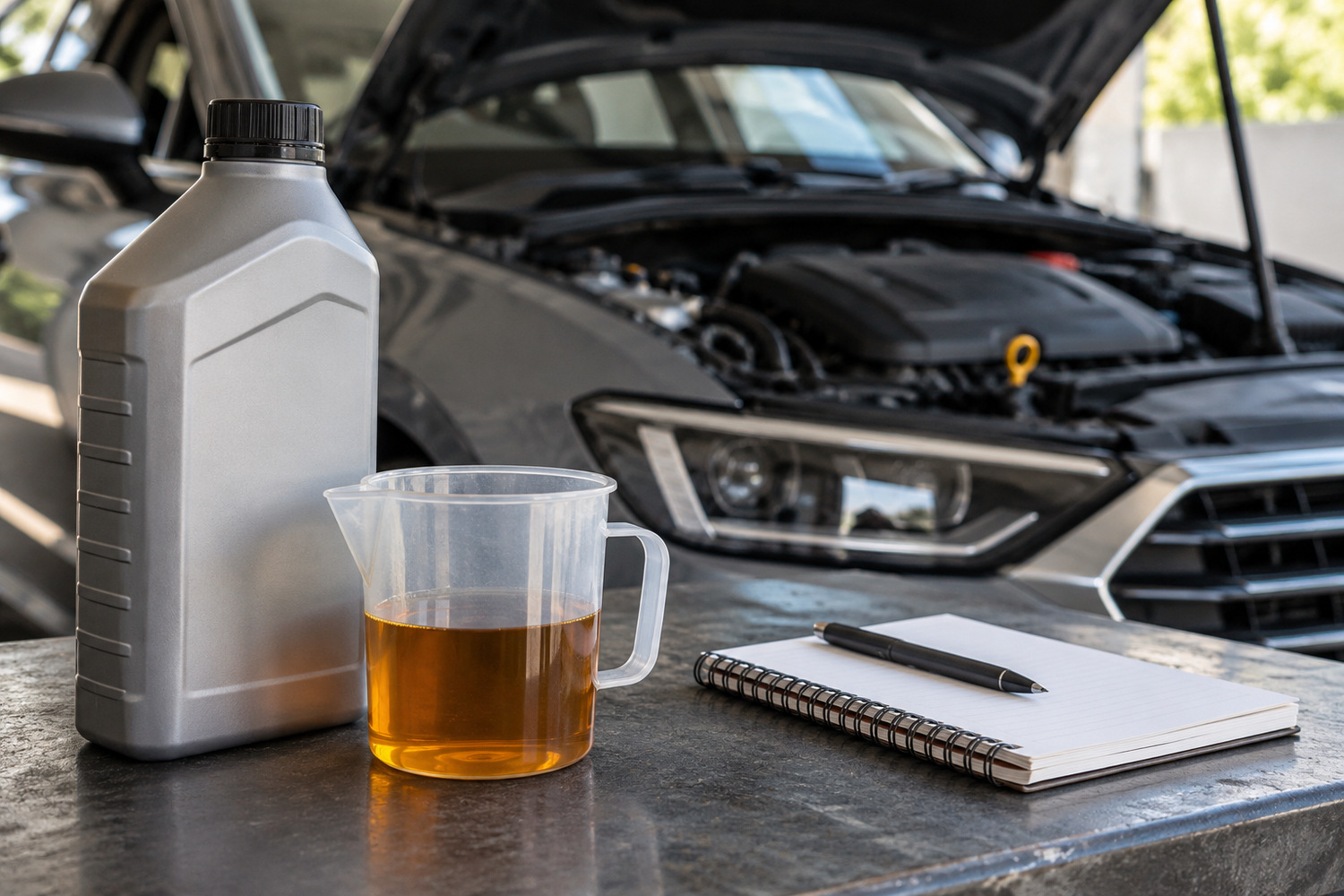
Volkswagen sets the number itself. Its workshop bulletin on measuring oil consumption gives the standard as up to half a litre per 1,000 kilometres. That bulletin was written for its workshops in the United States. It covers model years 2000 to 2021 and every engine code in them, so it is not a one-engine figure.
Read the number for what it is. It is the point at which Volkswagen expects a workshop to measure before repairing anything. It is not the point at which an engine is broken, and it is not a pass mark. A car sitting just under it that used nothing a year ago has still changed.
The same bulletin is honest about why engines differ. Every internal combustion engine uses some oil to lubricate and cool its own parts. Consumption varies from engine to engine, and it can shift over the life of one engine. Oil quality and thickness, engine speed, temperature, and road conditions all move the rate.
A rate means nothing without a distance. The method below is Volkswagen’s own. Fill to the upper mark. Write down the odometer. Drive the car the way you normally drive it. Re-check at about a thousand kilometres, the distance the bulletin sets for the test. Add no oil in between, because one top-up erases the measurement. If the low oil level warning comes on first, the car goes in rather than being filled.
Which engines and which years are affected?

The engine at the centre of this is the EA888. It is the two litre turbocharged petrol four both marques have used for years. Audi’s own bulletin on high oil consumption in the 2.0 TFSI, another United States document, names the cars it covers. Those are the A4 from 2009 to 2011, the A5 and A5 Cabriolet from 2010 to 2011, and the Q5 in 2011. Audi’s production answer arrived from model year 2012, and it was to reduce pressure in the crankcase.
That list names models and years, not a decade, so check your car against it.
The same engine family sits in Volkswagen badged cars, the Golf, Tiguan, and Passat among them. Audi’s bulletin does not name any of them, so those Audi years are not their years. If you drive a Golf, the common Golf problems Australian owners ask about are covered in their own article. Audi recorded the same cause and the same production fix on the supercharged 3.0 TFSI from 2009 to 2012.
Why is my VW or Audi burning oil?
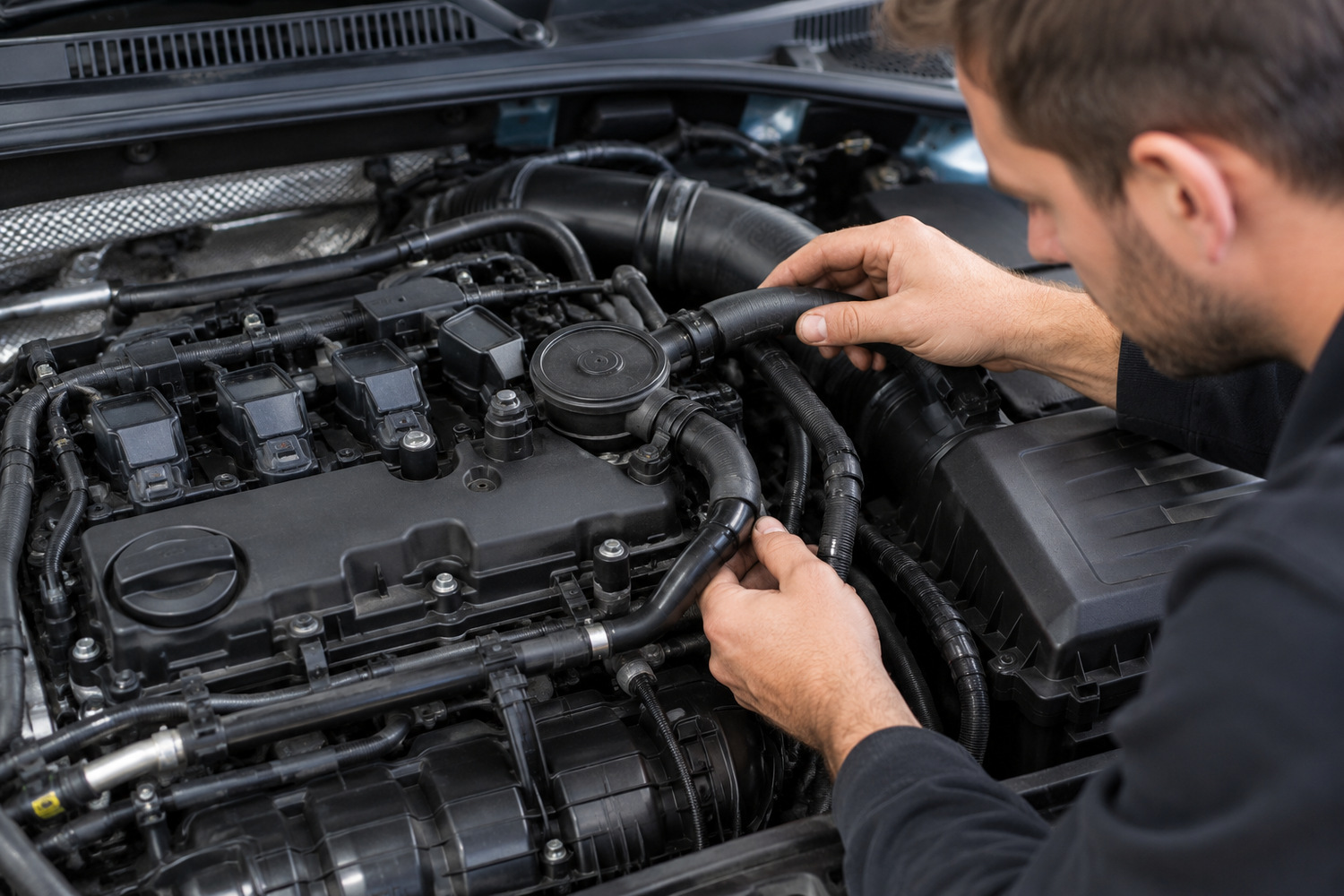
Four things let oil leave the sump. They run here from the cheapest to put right to the dearest, and that order is the manufacturer’s.
The vapour that breather system carries ends up on the intake valves. Why VW and Audi engines get carbon buildup is a subject of its own.
- The crankcase ventilation system. This is the plumbing that lets pressure out of the bottom of the engine. It feeds the oil mist it carries back into the intake. When the valve in it fails, crankcase pressure rises, and more oil vapour is drawn in and burnt. Audi’s bulletin says internal engine pressure can influence the rate of oil consumption. It names metro driving with extended idling as the conditions that bring it on. Around here that is Pittwater Road in the afternoon, or the short run from Brookvale to Manly. The usual tells are suction holding the oil filler cap down, or an idle that changes when the cap is lifted. Often there is nothing visible at the exhaust.
- Valve stem seals. The valves pass through small seals in the cylinder head. Once those seals harden, oil seeps down the valve guides while the engine stands. The tell is a blue haze at start-up, or after a long wait at the lights.
- Turbo seals. The turbocharger’s shaft spins in engine oil. A worn seal on that shaft lets oil through to the intake or the exhaust side. The tell is smoke when the turbo is working rather than at idle, and an oil film in the pipework.
- Piston rings. The rings seal each piston against the bore. Worn or stuck rings let oil into the combustion chamber, where it burns with the fuel. The tell is steady use, with no leak to find and no single moment when it smokes.
A level that falls with nothing visible at the tailpipe is often a leak rather than consumption. Leaks leave spots where you park, and a burning smell after a drive. Where they turn up on an Audi is part of the wider picture of common Audi problems.
How does a workshop find the cause?

Four checks separate the four causes, and their order matters as much as the checks.
Each step is cheaper and less invasive than the one after it. None of them needs the engine out of the car. If a repair has been quoted and none of this has happened, ask about that sequence.
- A measured consumption test comes first. The figure decides whether anything needs repairing at all.
- A crankcase ventilation check is next. Crankcase pressure is measured rather than guessed, which settles the cheapest cause quickly.
- A compression and leak-down test follows. Compression shows whether the cylinder is sealing. Leak-down shows where the escaping air goes, which separates rings from valves.
- A borescope goes in last. It is a camera on a thin lead, fed through the spark plug hole. It shows the bore and piston top without stripping the engine.
What does each repair involve?
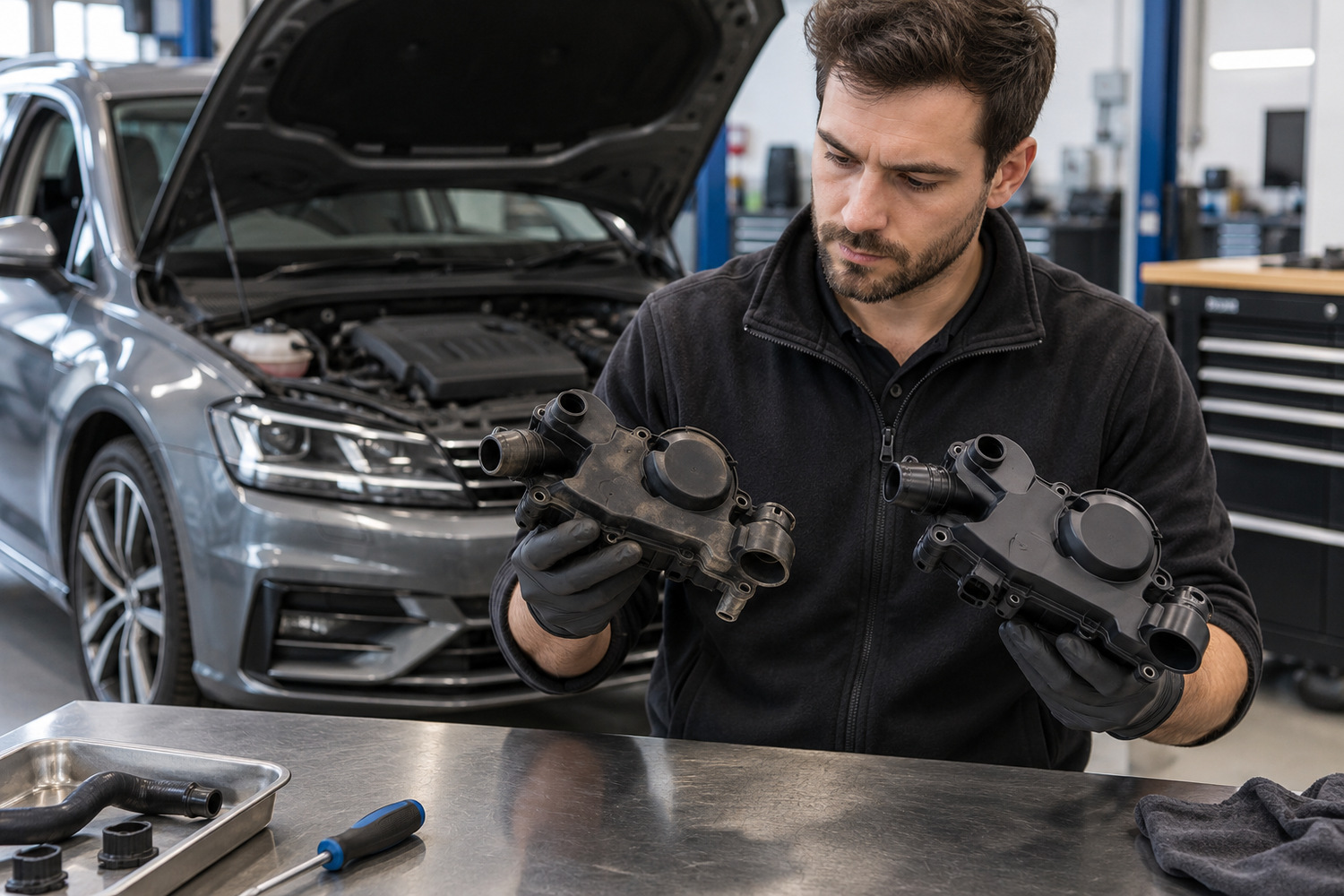
The breather end is a bolt-on job, on the outside of the engine. Audi’s own remedy on the 2.0 TFSI pairs the crankcase pressure regulating valve with the front crankshaft seal and a software update. Pistons appear nowhere in it.
Valve stem seals are a bigger job: the camshafts come out, and on some engines the cylinder head comes off too.
A turbo seal means the turbocharger comes off the car. These are usually replaced rather than resealed.
Piston rings are the one that earns the reputation. The engine has to come out to reach them. The used Q5 buying guide publishes what that repair costs on an early car, so read it before you accept a quote.
No additive and no heavier grade of oil repairs any of the four. They change the oil, not the part the oil is getting past.
Is it safe to keep driving?
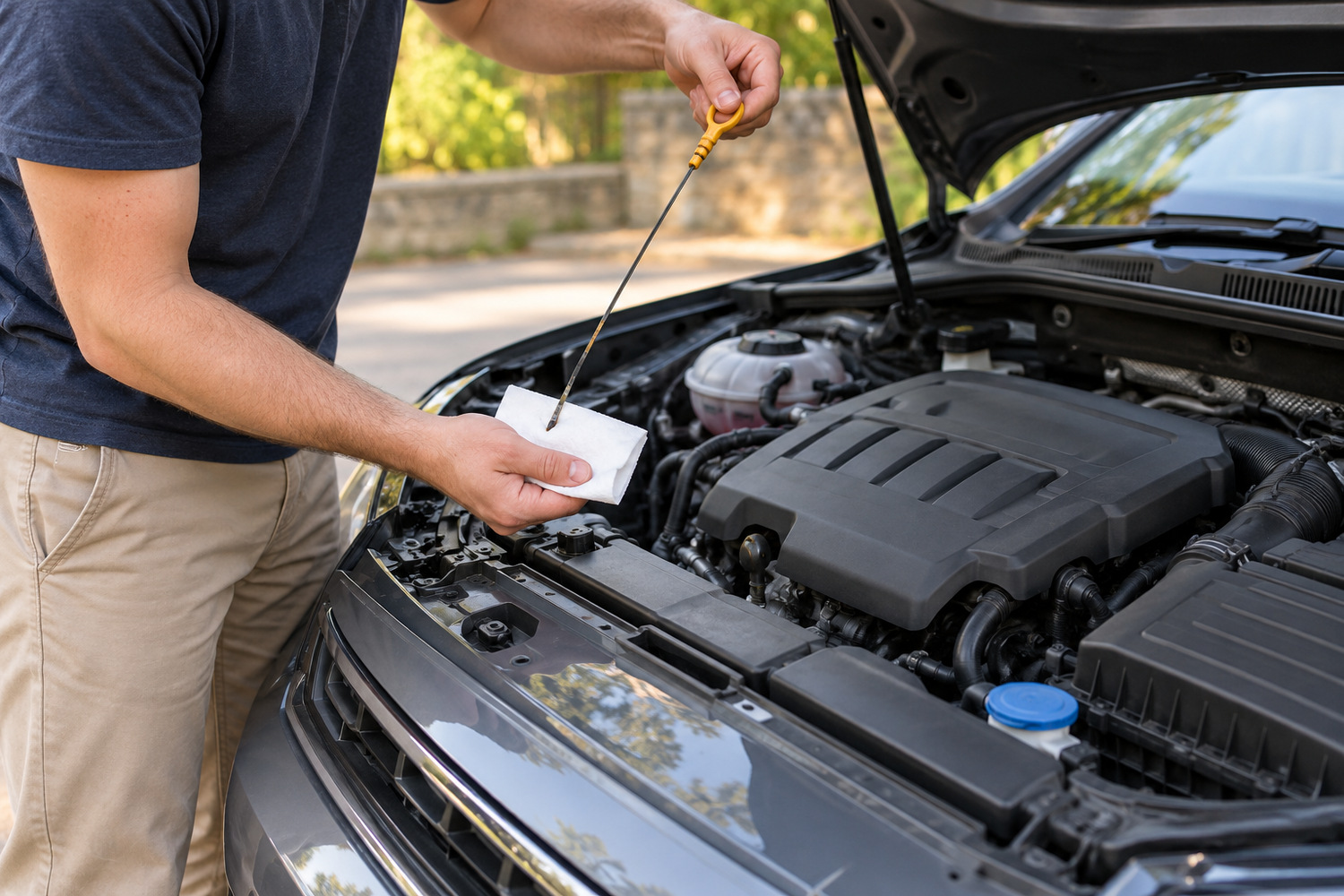
Mostly yes, provided you keep the level up. Running the engine low on oil is the real risk here, not the consumption itself. An engine starved of oil wears in minutes, in ways no top-up undoes.
That makes the dipstick the job, not the warning. Check the level at every second fuel stop. The message on the dash arrives when the level is already low, which is late if the rate is climbing.
A low oil level message is not the oil pressure warning light on an Audi, which is covered separately. That one is more serious, and the response to it is to stop.
There is a knock-on effect. Oil reaching the combustion chamber leaves the spark plugs oily. Volkswagen Australia’s own owner advice is blunt about where that goes: even a few spark failures can damage the catalytic converter. On a diesel, oil in the exhaust adds to the ash the filter collects. Why a diesel particulate filter keeps blocking is its own subject.
What is not safe is treating a top-up as the repair. It keeps the engine alive and tells you nothing about the rate. Without a figure, a steady rate looks like a climbing one.
Ask for the figure before you agree to any repair

The useful first visit is a measurement, not a repair. Ask for a measured oil consumption test, with the figure and the distance in writing. That piece of paper is what turns a quote into a decision.
A workshop that works on both marques should run the checks in that order, cheapest first. Bring the odometer reading, and the amount of oil you have added since the last service.
Say you are holding a quote for a piston ring repair, and nobody has measured the rate. Get in touch before you sign anything.
Frequently asked questions
Is half a litre every 1,000 kilometres a pass mark?
No, it is a trigger for measuring rather than a line between a healthy engine and a bad one. Two cars can sit under it while only one has changed its habits, and that change is the part worth chasing.
Does thicker oil stop an engine using oil?
A heavier grade can shave a little off the rate, since thickness is one of the things the rate responds to. It leaves the seal or the ring exactly as it was, so you have changed the symptom and kept the fault.
Will an oil additive fix oil consumption?
Additives work inside the oil, and nothing poured from a bottle rebuilds a hardened seal or re-seats a tired ring. If one appears to have worked, a measured figure before and after is the only way to tell.
Does an engine that uses oil always smoke?
No. Some of these faults put nothing visible out of the tailpipe, and a leak puts the oil on the ground instead. Watching for smoke misses both, which is why the level is the thing to track.