You're looking at a used Audi. It drives well, the inside is tidy, and the price seems fair. Then you start it cold and hear a short metallic rattle. Or the seller mentions they top up the oil between services. Are these normal quirks, or the first signs of a big bill?
Most common Audi problems are known, predictable and far cheaper to fix when you catch them early. The ones that come up most are oil use on some 2.0 TFSI engines, a timing chain rattle on cold start, carbon buildup on the intake valves, worn ignition coils and spark plugs, coolant leaks from the plastic water pump, and electrical faults like battery drain. None of these makes an Audi a bad car. They are the handful of things a VW and Audi specialist checks first, and knowing them helps you act before a small problem grows.
Here's a quick guide to the signs and how urgent each one is.
| What you notice | Likely cause | How urgent |
|---|---|---|
| Topping up oil between services | 2.0 TFSI oil use, worn rings or a leak | Monitor, get it measured |
| Metallic rattle for a second or two on cold start | Timing chain tensioner wear | Check soon, can get costly |
| Rough idle, misfires, engine light | Carbon buildup, coils or spark plugs | Check soon |
| Loss of power or hesitation when accelerating | Coils, carbon, turbo or boost leak | Check soon |
| Coolant smell, low coolant, puddle under the car | Plastic water pump or thermostat housing | Act before it overheats |
| Flat battery, warning lights, glitchy screen | Battery drain, sensor or wiring fault | Get it scanned |
| Jerky or rough gear changes | DSG clutch or mechatronic wear | Check soon |
Does the 2.0 TFSI Audi engine burn oil?
Some Audi engines use more oil than owners expect. The best-known case is the 2.0 TFSI petrol engine, part of the EA888 family, in cars built from roughly 2008 to 2013. That covers a lot of A4, A5 and Q5 models from those years. A design issue with the piston rings let oil slip past into the cylinder, where it burns off.
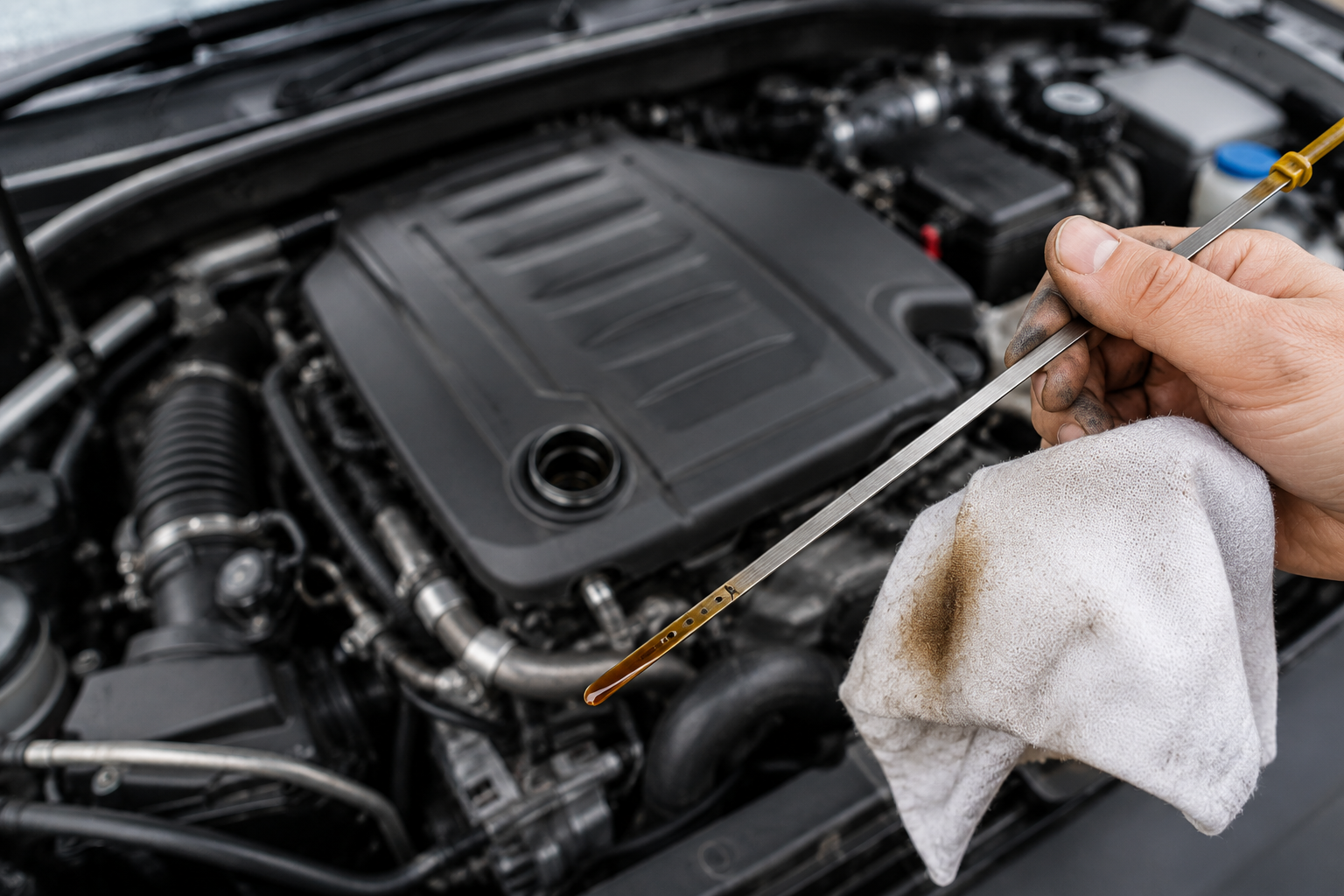
A small amount of top-up is normal on these engines. Audi treats up to about half a litre every 1,000 km as within tolerance. The warning sign is heavier use, like adding a litre every 1,000 km, or an “add oil” message showing up between services. Blue-tinged smoke from the exhaust points the same way.
Newer engines are not fully clear either. There is an overseas class action over oil use on some 2018-onward VW and Audi models. So it is worth checking oil use on an Audi of any age.
Oil leaks are the other half of the story. Common Audi leak points are the valve cover gasket, the cam chain tensioner seals and the oil filter housing. A leak shows as spots on the driveway or a burning smell after a drive. A specialist can measure oil use with a proper consumption test and trace leaks before they mark your garage floor. If you are buying used, ask about oil top-up habits and check the service records.
That metallic rattle on cold start
Start the car first thing in the morning and you might hear a brief metallic rattle for a second or two, then it fades. On some Audi and VW engines this points to a worn timing chain tensioner. The tensioner keeps the timing chain tight. As it wears, the chain goes slack on start-up until oil pressure builds.
This one matters. If the chain jumps, valves and pistons can meet, which turns a tensioner repair into an engine rebuild. Fresh oil can quieten the noise for a while, but it does not fix a worn tensioner. Not every cold-start noise is the chain, so the source needs to be confirmed before anyone quotes parts. We cover the checks in our guide to Audi and VW timing chain rattle on cold start.
Rough idle, misfires and hesitation
If your Audi idles roughly, misfires, or hesitates when you accelerate, three things are worth checking: the ignition coils, the spark plugs and carbon buildup.
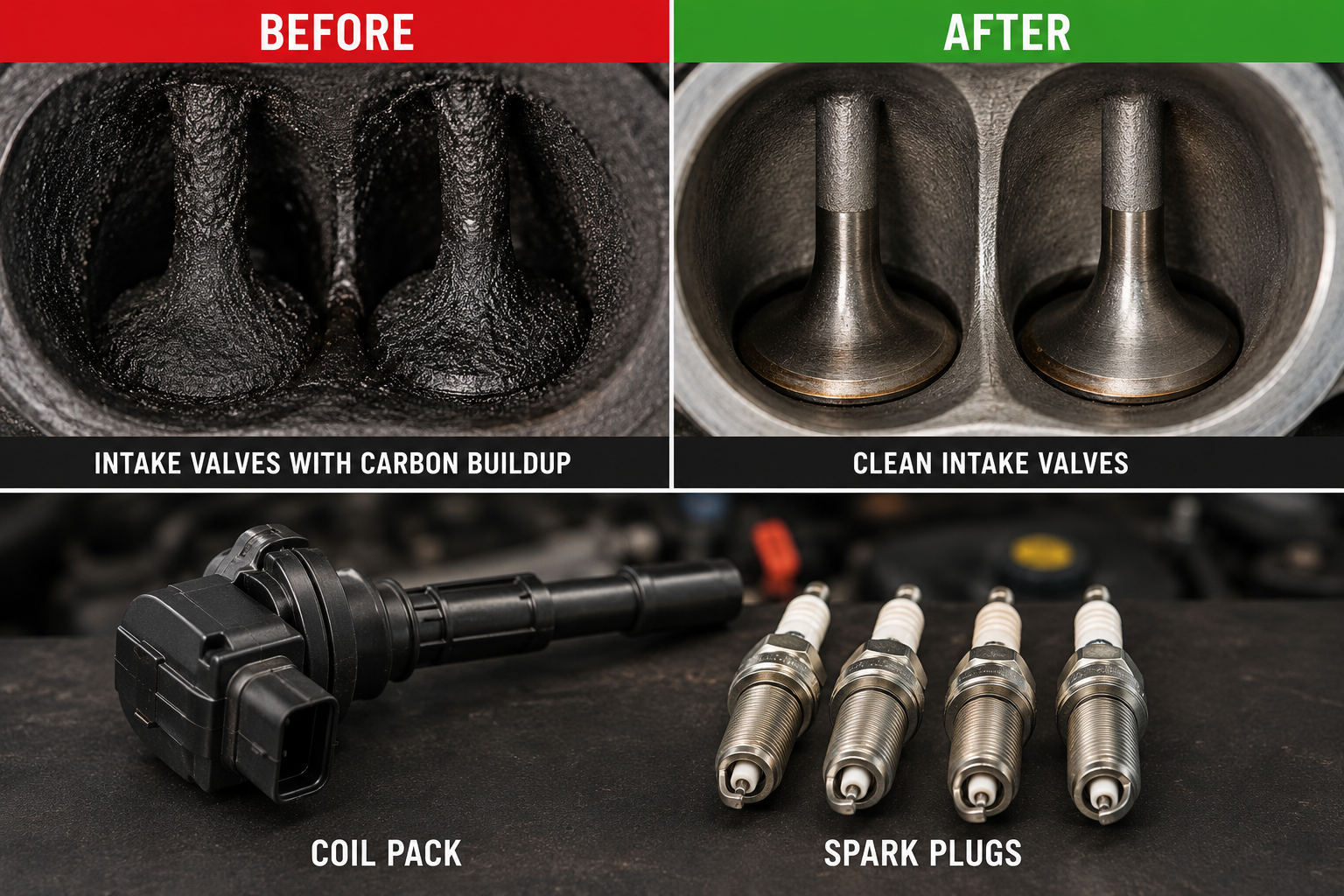
- Ignition coils. Each cylinder has its own coil that fires the spark plug. Heat and vibration wear them out over time. A failing coil makes that cylinder misfire, so you feel a stumble and often see the engine light flash. A coil is a modest part, but a long-running misfire can damage the catalytic converter, which is a much bigger bill.
- Spark plugs. Worn or fouled plugs cause the same rough running and are usually replaced as a set. On these engines they wear on a schedule, so they are a normal service item, not a fault.
- Carbon buildup. Direct injection engines, which is every TSI and TFSI, do not wash the intake valves with fuel. Carbon slowly coats the valves and restricts airflow, giving rough idle and weaker response. The fix is walnut blasting, where crushed shells clean the valves. We explain it in our article on carbon buildup in Audi and VW engines.
If the main thing you notice is a clear loss of power or hesitation under acceleration, rather than a rough idle, the cause can also sit in the turbo or boost system. We walk through that pattern in why Audi and VW engines lose power under acceleration.
Coolant leaks and the plastic water pump
On many VW and Audi engines the water pump and thermostat housing are one plastic unit. Over time the plastic can crack or the gasket can fail, and coolant leaks out. This often shows up between about 40,000 and 100,000 km.
The first sign is usually a slow drop in coolant level. You might see the coolant warning light, find a small puddle under the car, or smell coolant after a drive. Left alone, the engine can overheat, and that risks far dearer damage to the head gasket. If you notice any of these, top up the coolant and book a check before you drive far. Our Common VW Golf problems guide covers the plastic water pump in more detail, as it is shared across many models.
Electrical faults, sensors and battery drain
Audis carry a lot of electronics, so electrical faults are among the more common problems, especially on larger models like the A6 and Q7. Typical issues include worn sensors, wiring that chafes over time, infotainment screens that freeze or reboot, and a battery that keeps going flat.
A slow battery drain is one of the most common. Something stays awake when the car is locked and pulls power overnight. Lots of short drives make it worse, because the battery never fully recharges. If most of your driving is short suburban trips, our guide on why short trips are tough on European engines explains what to watch for.
A dashboard warning light is often the first clue to an electrical fault. What the light means varies a lot, so we cover the common ones in the warning lights Audi drivers misinterpret most rather than repeat them here. The key point is to get the car scanned, as the fault code narrows down the cause quickly.
Rough or jerky DSG gear changes
Many Audis use a DSG gearbox, a dual-clutch automatic that shifts fast and smoothly when healthy. When something is wrong, you feel it as shudder, hesitation, or rough shifts, often worst at low speed. Early on, a fluid and filter service can restore normal shifting. Left too long, worn clutches or a mechatronic fault get more expensive. We explain the early signs in why Audi and VW DSG gearboxes feel rough before they fail.
Exhaust parts wear too. A blowing exhaust or a rattle from a loose heat shield is worth checking, though it is rarely as urgent as the items above.
Which Audi problems are dealbreakers when buying used?
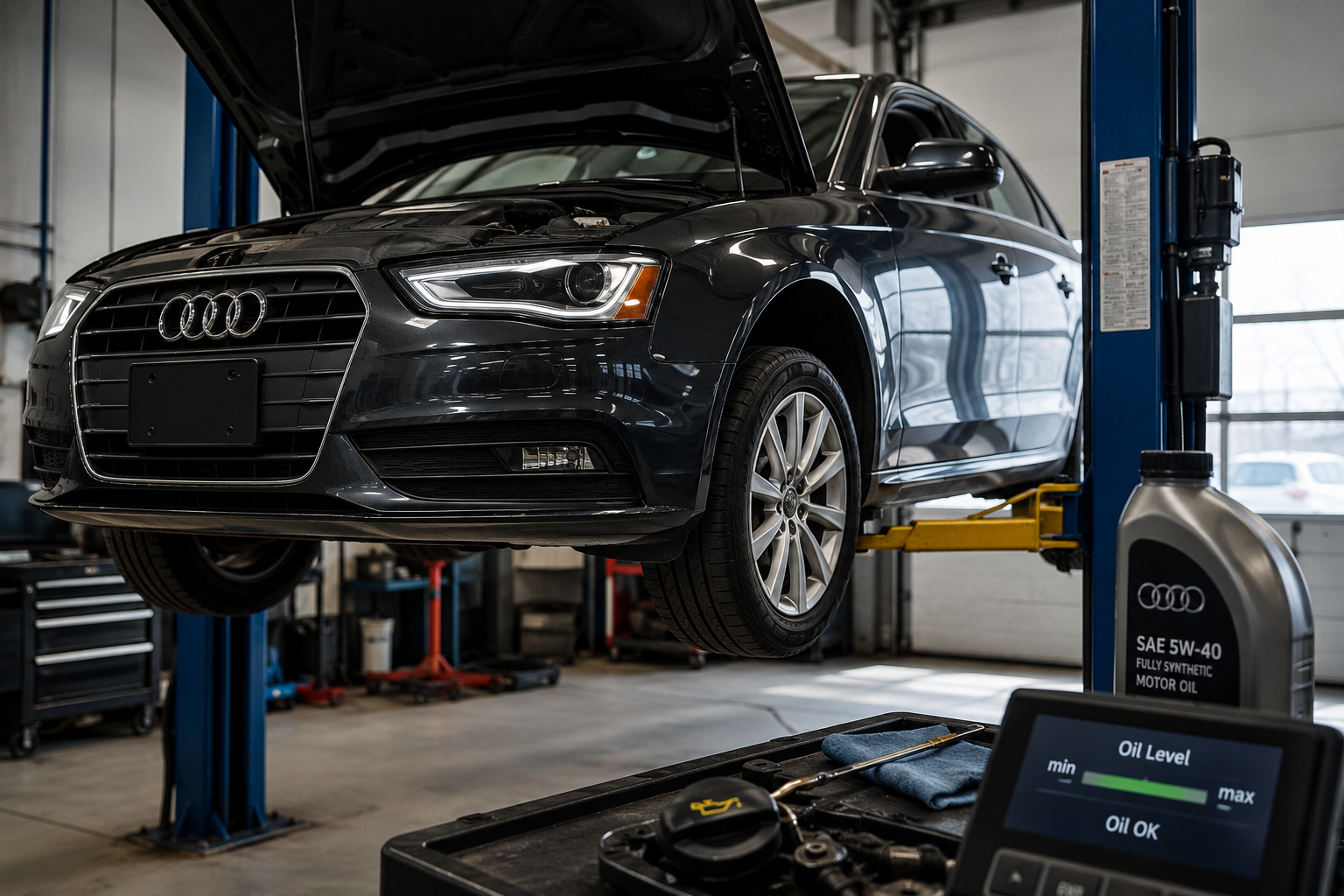
Not every fault should stop a purchase. Many are normal wear you can factor into your offer. The ones to treat with more caution are a timing chain rattle with no record of a tensioner replacement, heavy oil use on a 2.0 TFSI, and any sign the car has been overheating.
A test drive will not show most of these. A pre-purchase inspection by a VW and Audi specialist picks up early timing chain stretch on a scan tool, oil use trends, gearbox data and coolant history. If you are on the Northern Beaches and about to drive a car home over the Spit Bridge, an hour on the hoist first can save you thousands. For a full run-through, see our guides on what to check before you buy a used car and used Audi Q5 problems.
How to stay ahead of Audi problems
You cannot design out every issue, but you can slow most of them down. A few habits help:
- Service on time with the right oil. The correct VW and Audi spec oil, changed on schedule, slows carbon buildup and protects the timing chain.
- Act on the small signs. A brief rattle, a slight misfire, or the odd oil top-up are early clues. They are cheaper to sort now than later.
- Take the occasional longer drive. If you mostly do short trips, a longer run now and then lets the engine warm up fully and the battery recharge.
- Get warning lights read, not reset. A scan tells you the real cause before you spend on parts.
None of this makes an Audi maintenance-free. It just keeps the common problems small.
Buying a used Audi, or is your own showing one of these signs? Book a VW and Audi specialist inspection at Northside AutoHaus in Brookvale before a small fault turns into a big bill.