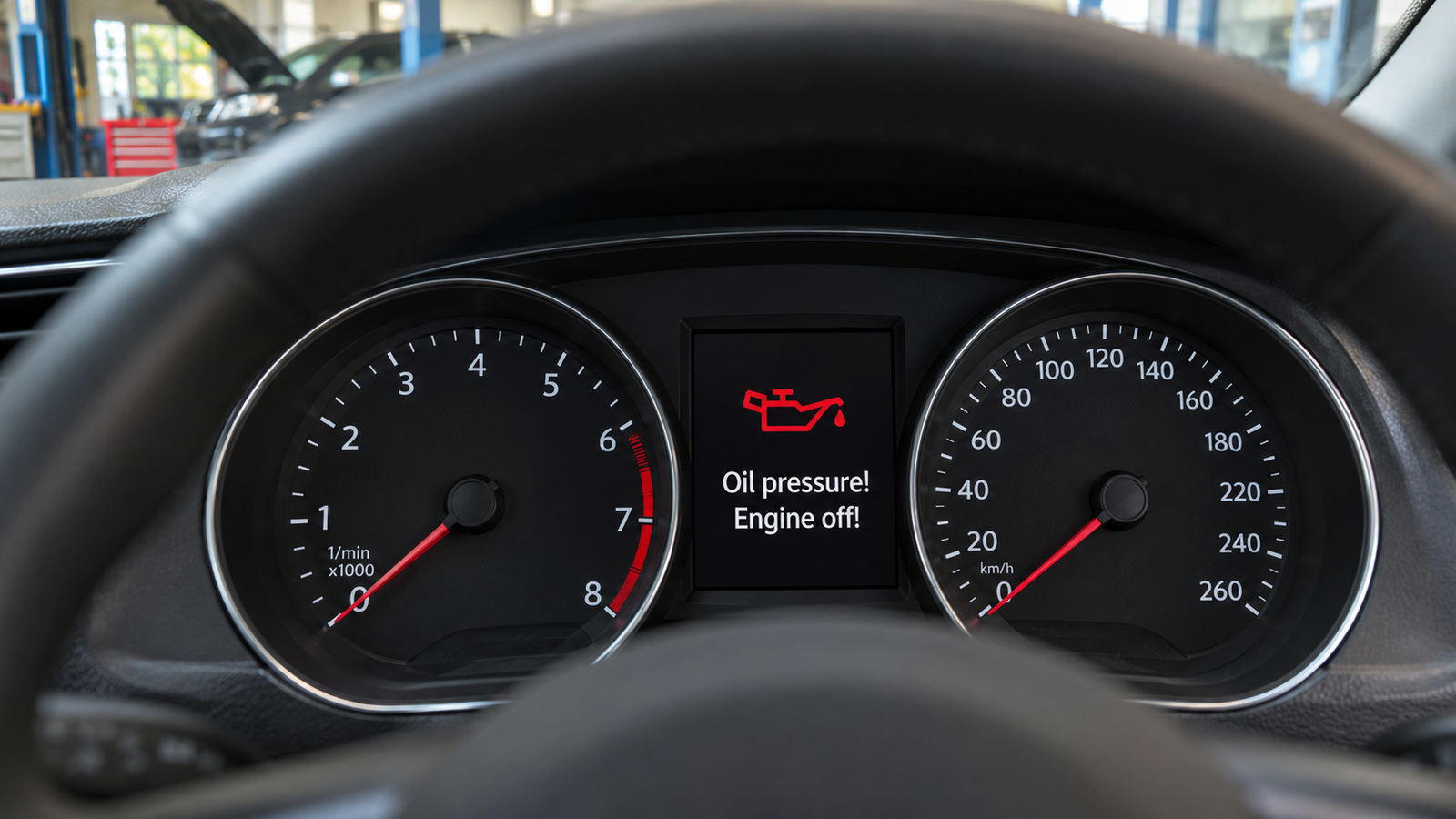
A red oil symbol lights up on a Golf halfway through the morning run to work.
That red oil pressure light is the warning on a Volkswagen or Audi that means stop the engine somewhere safe, straight away. Many other dashboard warning lights are a request to have the car read soon, and the text shown with the symbol tells you which kind you have. On a Volkswagen, a red lamp is a problem to check immediately. Yellow or orange means a check as soon as possible, and green, white or blue usually shows a function that is switched on.
So the colour tells you how quickly to act. The symbol and its message tell you what to act on. Drivers go wrong in both directions: they panic over a message that only wanted attention, or they keep driving on the one red light that meant stop.
Why a warning light does not always mean a broken part

A warning light is the car reporting something its sensors have seen. That report can sit in one of three places:
The same lamp can come from any of the three. That is why reacting to the symbol alone goes wrong. Treat every light as a breakdown and you call a tow truck for a reminder. Treat every light as a reminder and you drive on through the one that needed the engine switched off.
- A confirmed fault. Something has failed and the car has detected it.
- A reading out of range. A sensor has reported a value outside what the car expects. The problem may be the part it watches, or the sensor itself.
- A request for a check. The car wants a system looked at before the problem grows.
Oil pressure light or low oil level message?
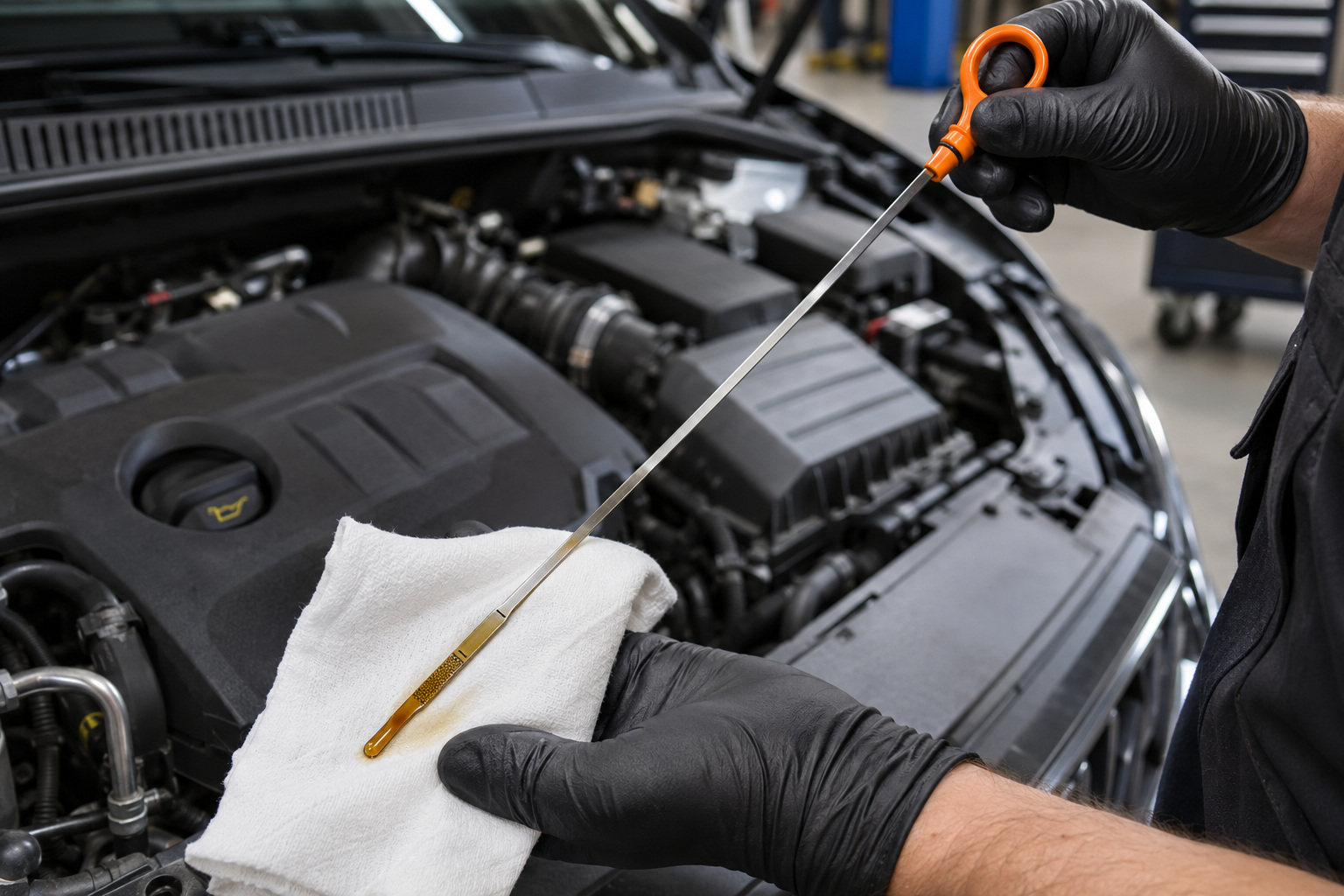
Treat the red oil pressure light as a stop, wherever you are. Volkswagen’s owner information describes the red oil lamp as engine oil pressure too low. Pressure is what pushes oil around the engine’s moving parts, and an engine that keeps running without it can be badly damaged.
Pull over somewhere safe, switch the engine off and do not drive on, even to a workshop around the corner. A dipstick showing plenty of oil does not make the light safe to ignore. The problem may lie in how the oil is being moved.
The low oil level message is a different warning. It reports how much oil is in the engine, and pressure is a separate reading. Check the level on flat ground with the engine off. Top up with the oil your owner’s manual specifies, and have the car checked if the message keeps coming back. If it returns between services, find out whether your VW or Audi is using too much oil between services.
The same split applies whether you drive a Golf, a Polo, an A3 or a Q5. Red oil pressure means stop. The level message means check.
How to read a coolant warning
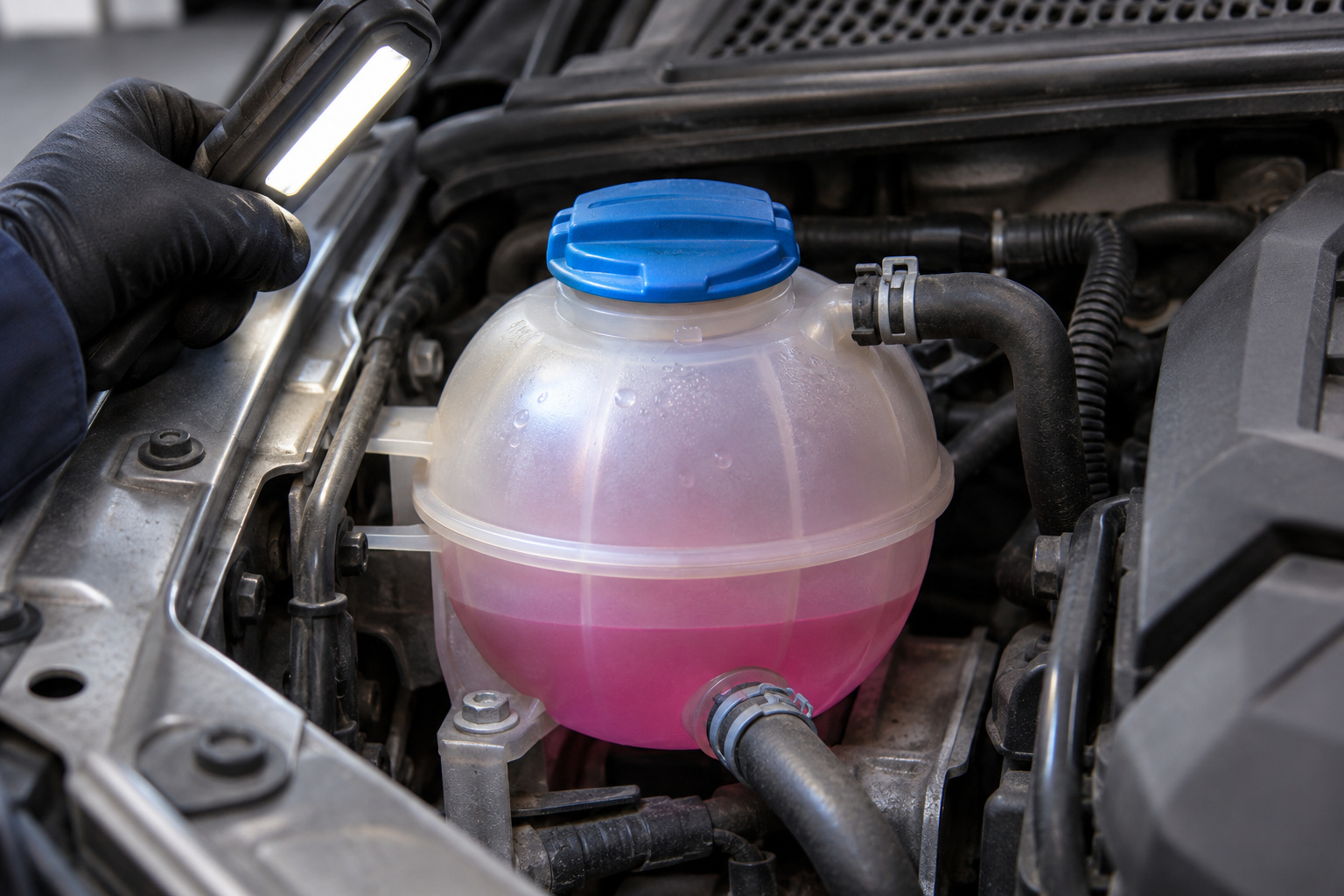
A coolant warning can relate to the amount of coolant in the system or to the engine running hot. Drivers misread it both ways. Some top up and forget about it. Others assume the engine is finished. Neither is safe until you know which one the car is reporting.
If your car shows a temperature gauge, it is the first cue. A needle in its usual place suggests the engine is not running hot at that moment. A needle climbing towards hot means it is. The text message is the other cue, so read it before deciding anything.
If the warning is red, the gauge is rising or the car tells you to stop, pull over safely and switch the engine off. Leave the coolant cap alone while the engine is hot, because the system is under pressure.
Coolant loss has its own list of causes, from hoses and the radiator to the pump. Our water pump article covers when a VW or Audi water pump needs replacing.
What the EPC light means on a Volkswagen or Audi

EPC stands for electronic power control. The lamp relates to engine management, the electronics that run the engine. When it comes on, the car may limit power to protect itself.
That is why it gets misread as engine failure. The lamp appears and the car feels flat at the same moment, which is alarming. The lamp tells you the engine management system has seen a problem. It does not tell you what the problem is or how serious it is. A scan is what answers that.
If the car drives normally, keep the trip short and have it read soon. If power has dropped away, or another warning has come on beside it, stop somewhere safe and call for advice before going further. For the causes behind that loss of power, read why Audi and VW engines lose power under acceleration.
On a Golf, Polo or Tiguan, an EPC lamp that appeared once and went out is still worth raising at the next Volkswagen service. The car may have stored a record of what set it off.
Read the message that comes with the warning symbol

Where the car shows text with a symbol, the text is the part to act on. Volkswagen tells owners that a lamp’s meaning often differs from model to model and over time, and points them to the printed or in-car owner’s manual. The same symbol on an older Golf and a newer Tiguan may not be asking for the same thing.
A few habits make the message easier to use:
- Read the whole message before you move off, and photograph it once the car is parked safely.
- Look the symbol up in the manual for your exact model and year.
- For a symbol you do not recognise, including the triangle some Audi drivers call the central indicator light, go by the text beside it and the manual for your car.
Diesel owners see this with AdBlue, the fluid some diesels use to clean their exhaust. The message says whether the car wants a refill or has a system fault. To tell them apart, check whether your AdBlue warning is a refill or a fault.
When a warning light goes out on its own

A light that goes out after a restart has not necessarily fixed anything. The condition that set it off may simply not have happened again on that drive. A workshop scan can often still read what the car recorded, so a light that came and went is still worth mentioning.
The exception is a red oil pressure or coolant warning. Even if it clears, have it checked before you rely on the car again.
On an A3 or Q5, raise any light that came and went at your next Audi service, along with when it appeared and what the car was doing.
Some lights are designed to go out by themselves. On a Volkswagen diesel, a particulate filter light on its own should go out after the drive the owner’s manual asks for. If it keeps coming back, read why the DPF keeps blocking on a VW or Audi diesel.
Record the warning before you book the car in
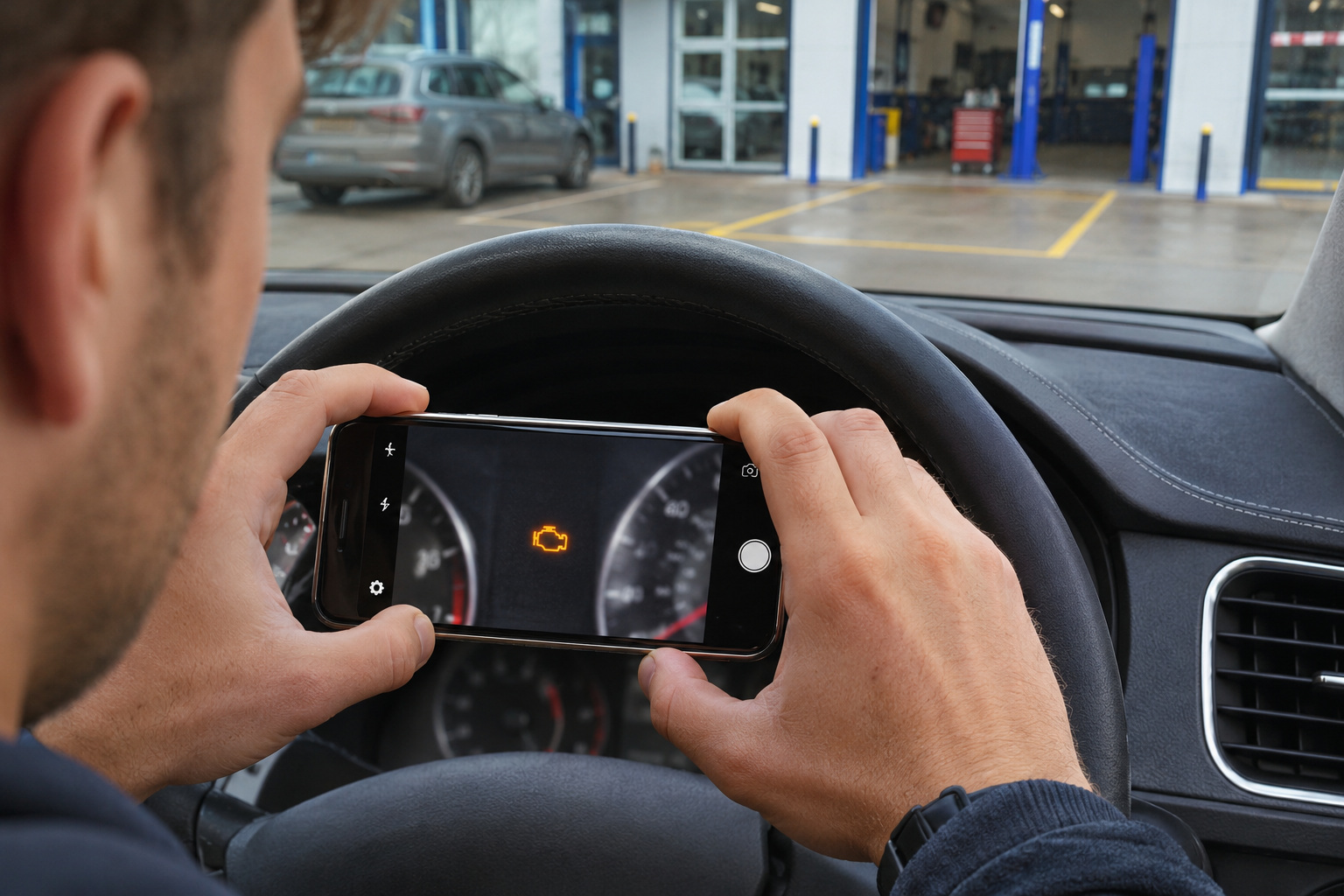
The more exact the record, the less the workshop has to guess. Before you ring, note:
If the light came on during the climb out of Manly, say so, and say whether the car felt any different on the hill. Details like that help narrow down when the car saw the problem.
- The colour, the symbol and the exact text message. A phone photo of the cluster, taken while parked, is the easiest record.
- Whether the light flashed or stayed on.
- What the car was doing: a cold start, climbing a hill, sitting in traffic or just after refuelling.
- Whether it went out after a restart, and whether it came back.
- Any change in how the car drove, sounded or smelt.
Bring that record to Northside AutoHaus so the warning can be read rather than guessed. A red oil pressure or coolant warning is different: leave the car where it is parked and get in touch before you drive it anywhere.
Frequently asked questions
What does a red oil pressure light mean on a Volkswagen?
The engine is not getting enough oil pressure. Stop as soon as you safely can, turn the engine off and get help before the car goes any further.
Is the low oil message the same as the oil pressure light?
No. The message is about how much oil the engine holds, so the answer is an oil level check and the oil your manual names. The red pressure light is the more serious of the two and calls for the engine to be switched off.
Do I need the owner’s manual to read a warning light?
It is the safest guide you have. Symbols and what they mean vary between models and years, so read the text on the display first and then check the book for your car.
What should I record when a warning light comes on?
Take a photo of the cluster with the message showing, and jot down what the car was doing at the time. Add whether the light flashed, and whether it cleared when you restarted.