A Tiguan with a park brake button sits in the driveway. A new set of rear pads waits on the garage bench.
You can often change the rear brake pads on a Volkswagen or Audi at home, but the park brake decides how. If the park brake is a lever or a pedal, the rear pads are a conventional job for someone who already works on brakes. If it is electronic with a motor on each rear caliper, the pistons cannot be pushed back by hand. A diagnostic tool has to release the calipers and set pad change mode before any work starts.
How to tell which park brake your car has
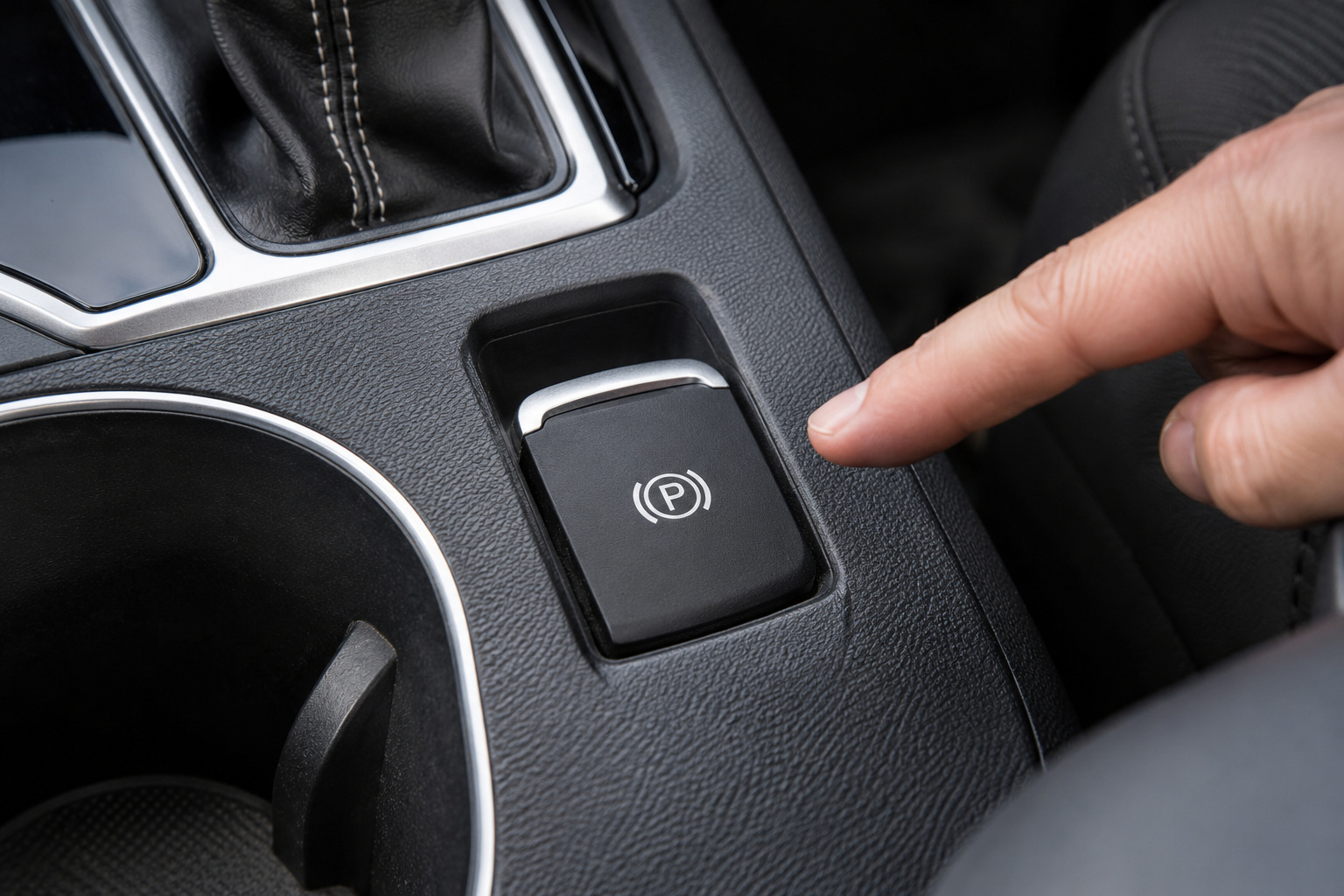
Work this out before you buy pads or jack the car up. The control in the cabin is the first clue, and the back of the rear caliper gives the clearest answer.
The badge will not tell you. Whether you drive a Golf, Tiguan, A3 or A4, the answer for your car sits in its own manual and on its own calipers.
- A lever between the front seats, or a pedal by your left foot, means a cable park brake that you apply by hand or foot.
- A switch or button on the centre console, where a lever would otherwise sit, means an electronic parking brake (EPB).
- A button alone does not settle the design. Some electronic park brakes keep a cable and use a motor to pull it. Others put a motor on the back of each rear caliper that moves the piston directly.
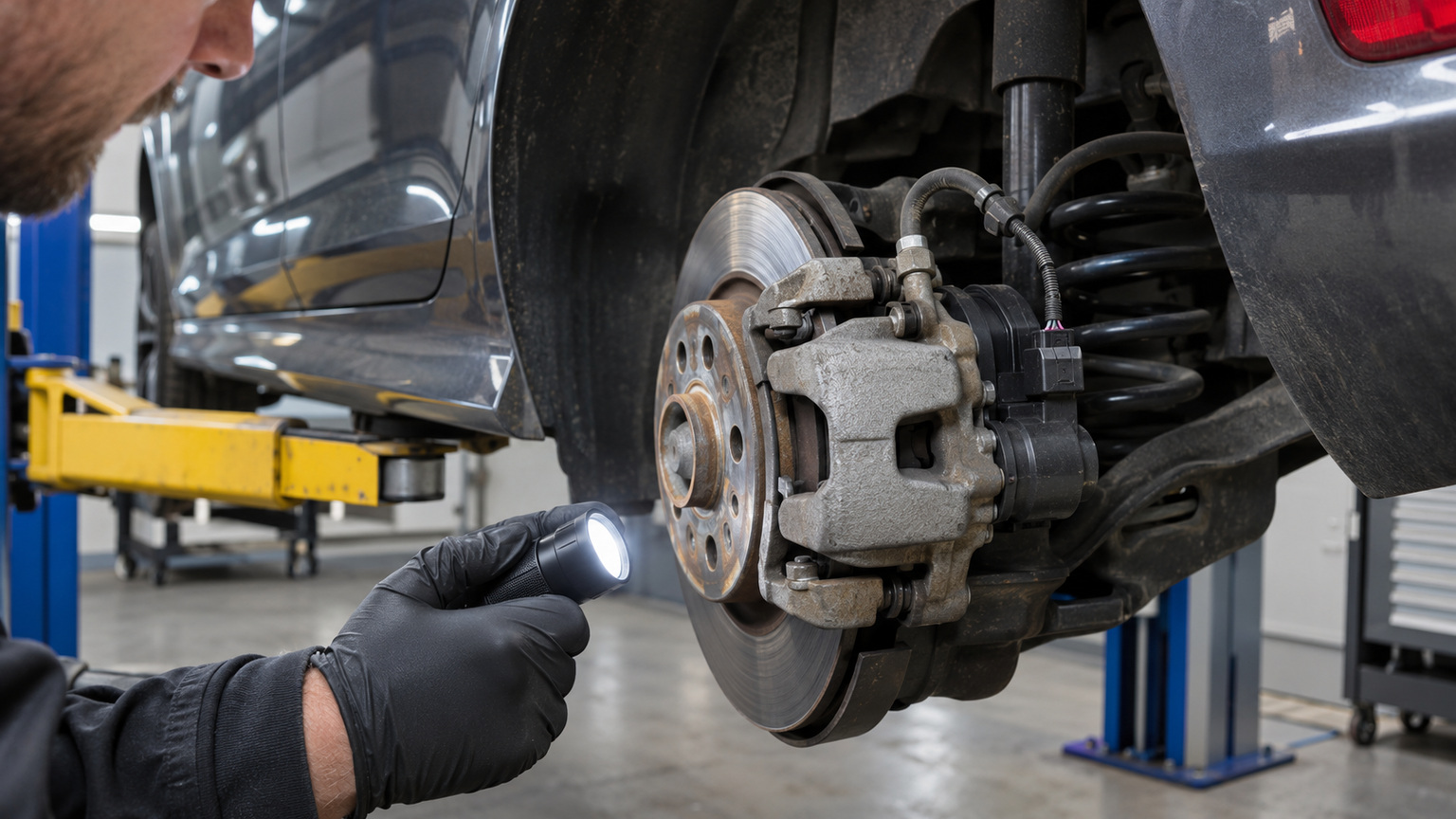
- A motor unit bolted to the back of the rear caliper, with a wiring plug going into it, shows the caliper-mounted design. Where the wheel spokes leave a gap, a torch may show it without lifting the car.
- The owner’s manual for your car is the place to confirm which park brake it has.
Why the caliper-mounted park brake needs a diagnostic tool
On a car with a lever or pedal park brake, the rear caliper piston can be pushed or wound back by hand. That makes room for new pads, which are thicker than the worn ones.
On the caliper-mounted electronic design, the motor on the back of the caliper drives the piston to clamp the pads when you apply the park brake. Because the motor moves the piston, it cannot simply be pushed or wound back the way an older caliper’s can.
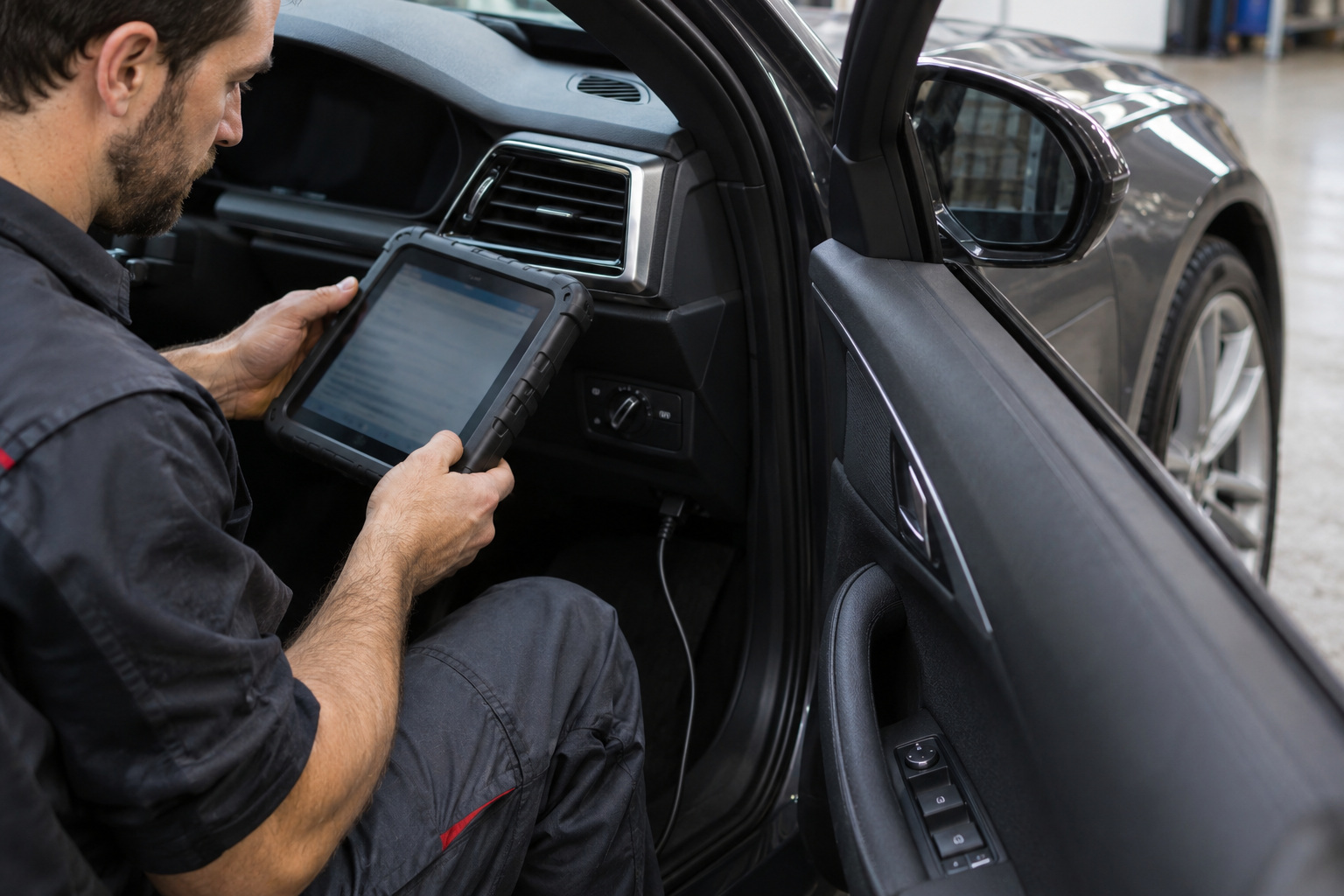
One caliper maker’s workshop instructions say a diagnostic service tool must be used. The rear calipers are released and the system is put into pad change mode before any mechanical work, and before the car goes up on a hoist. At home, that means before it goes on stands.
The order matters. Finding out with the wheels off that you need a tool you do not have means putting the car back together, or leaving it on stands until you get one.
That requirement belongs to the caliper-mounted type. If your car’s electronic park brake keeps a cable, check its manual for any steps it gives before rear brake work.
What else to check during a rear pad change
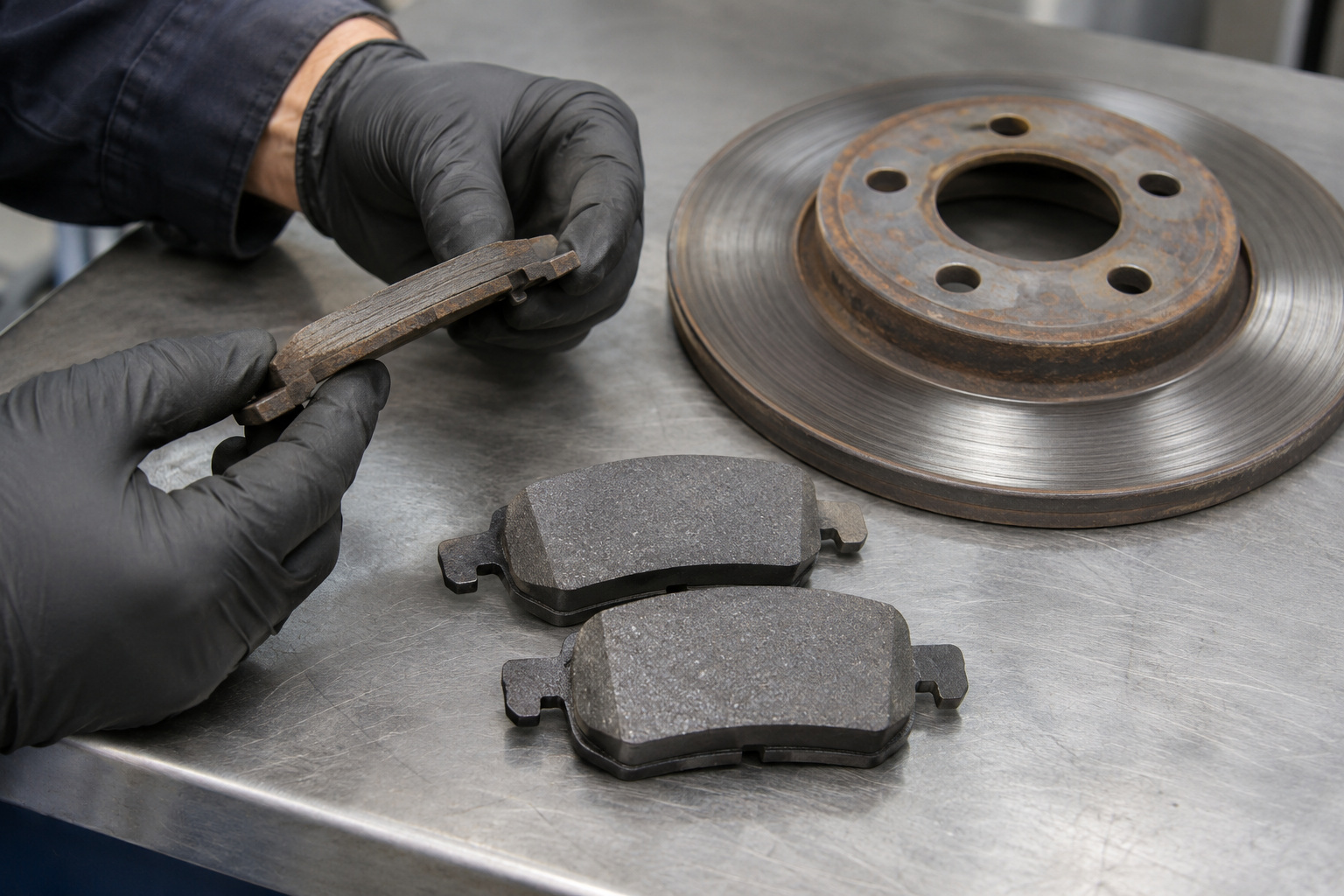
New pads are only part of the job. These checks come with any rear pad change, whatever the park brake design.
- Check the discs for wear and condition at the same time, because worn or damaged discs change the job.
- Where a pad wear sensor is fitted, check it when the old pads come out. If the brakes were squealing before you started, our guide to what brake noises mean on an Audi explains the likely causes.
- Before the car is driven, the park brake should apply and release normally from the button or lever.
- Brakes are safety-critical. The car should not be driven until the job is finished, the pedal feels normal and the brakes work as they should.
When it is a home job and when to book it in
The park brake design draws the line, along with how much brake work you have done before.
The first real test comes later, when the park brake has to hold the car on a steep driveway in Balgowlah or Manly. It should hold firmly, release cleanly and show no warning.
- Lever or pedal park brake: a conventional rear pad job if you are already confident working on brakes and the car is safely supported on stands.
- Electronic park brake with a motor on each rear caliper: a home job only with a diagnostic tool that supports the park brake service function on your car. Check that with the tool’s maker before you start, not halfway through.
- Unsure which design you have, or a park brake warning already showing on the dash: book it in.
Found a motor on the caliper and have no suitable tool, or still cannot tell which design you have? Northside AutoHaus carries out brake pad and disc work on Volkswagen and Audi models. Tell us the model, the year and what you found behind the rear wheel, and book a time through our contact page.
Frequently asked questions
Does every electronic parking brake need a scan tool for new rear pads?
No. The tool and pad change mode go with the design that has a motor on each rear caliper. A button that works a cable through a motor is a different arrangement, so check the manual for your car.
What should I do if the park brake warning comes on after a pad change?
Leave the car parked rather than driving it. If the warning stays on, book it in, because the park brake has to apply and release normally first.