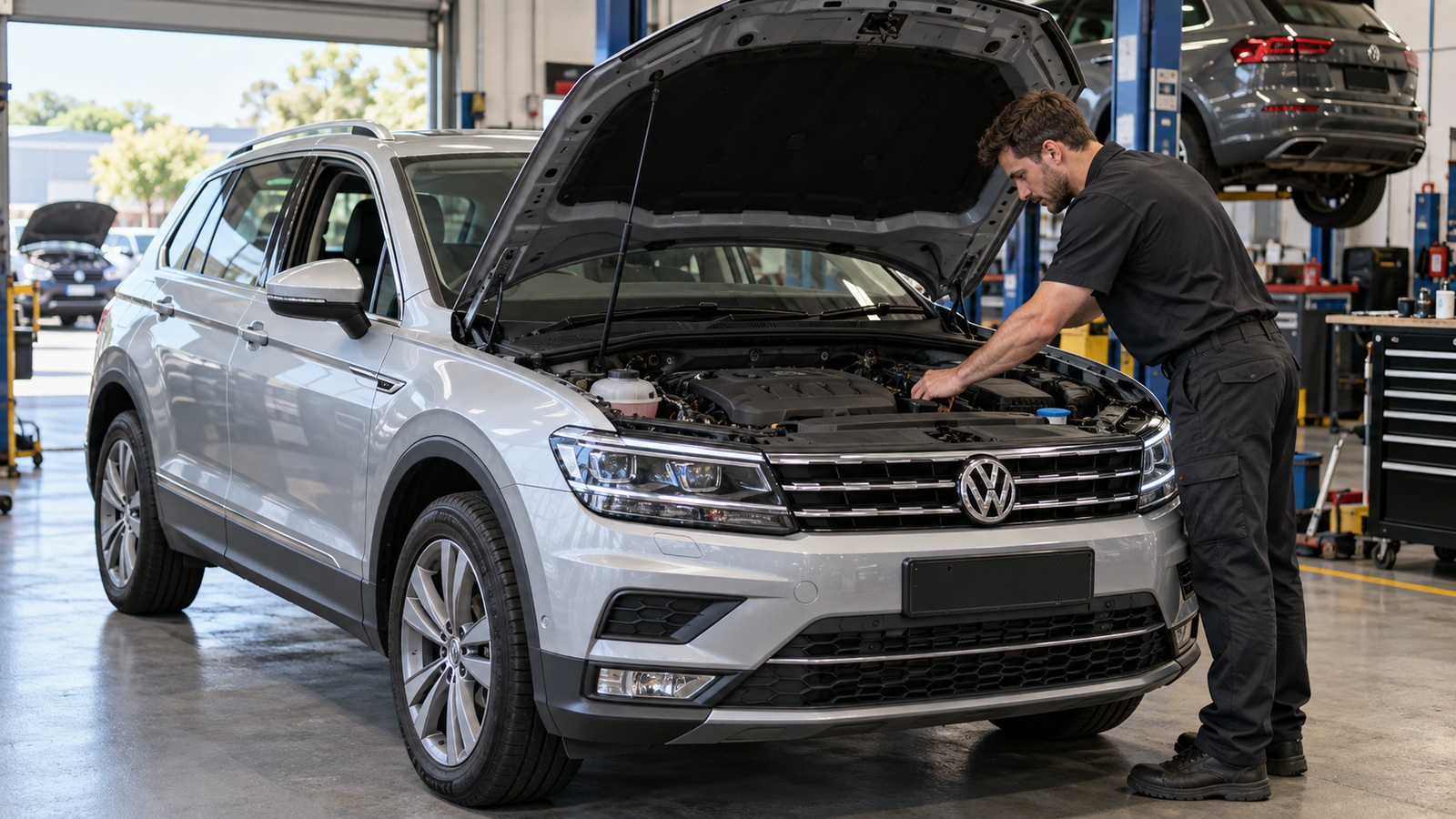
Most VW Tiguan problems come down to three things. First-generation 2.0 petrol cars, roughly 2008 to 2013, rattle on cold start from a weak timing chain tensioner. Second-generation cars leak coolant at the plastic water pump housing. Blocked panoramic roof drains soak the carpet on both.
None of that is a reason to walk away from the model. It is a reason to know which Tiguan is in front of you. The faults sort themselves neatly by generation and by engine. Buy the right one, or check the one you own, and the list gets short.
Which Tiguan is which
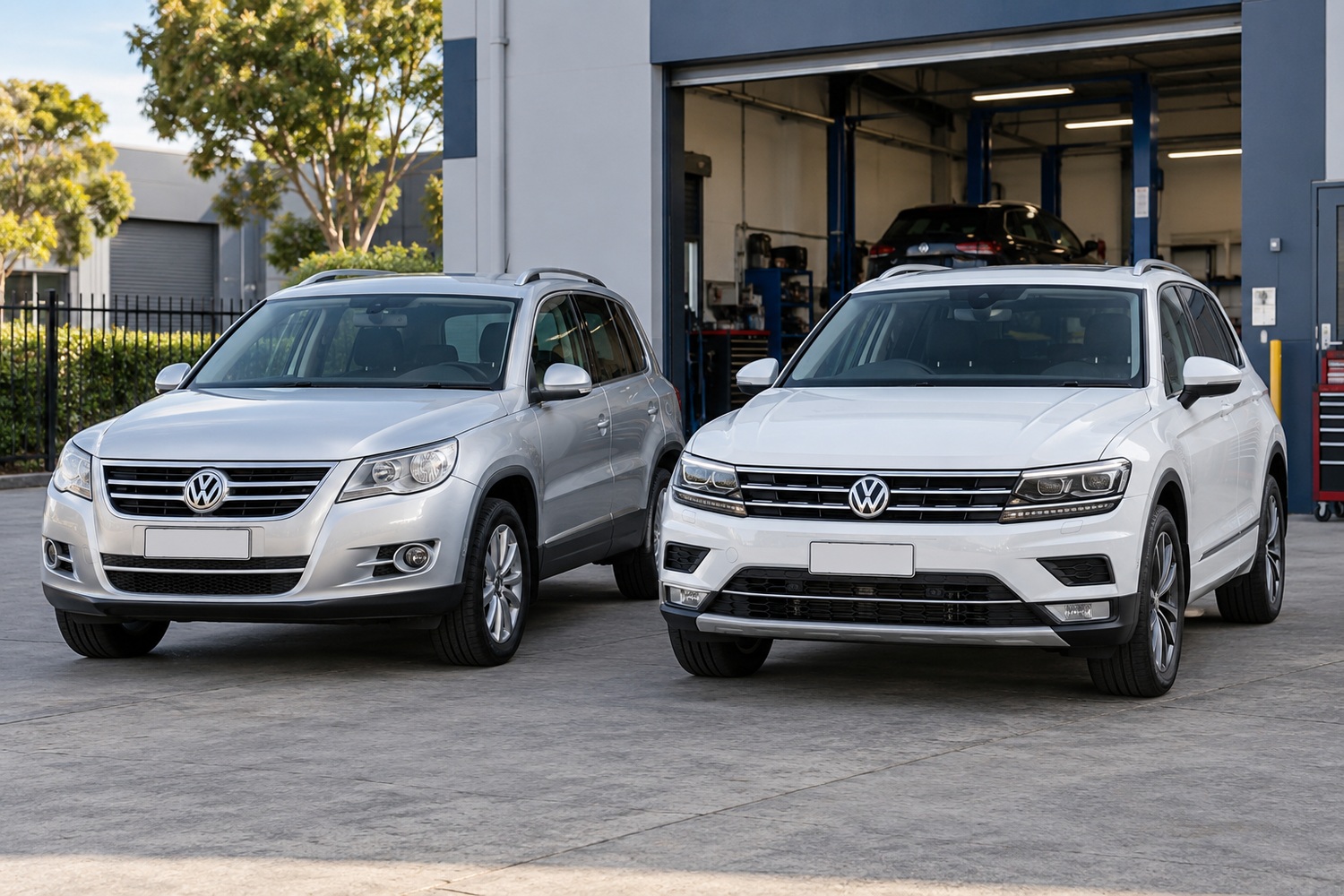
There are three generations, and only two of them matter to a used buyer.
The first, chassis code 5N, sold here from 2008 to 2016. The second, AD1, arrived in September 2016 and ran through to 2024. The third, CT1, went on sale in Australia in May 2025. The Tiguan Allspace is the longer seven-seat version of the second generation. It landed here in July 2018. It shares that generation’s engines and most of its weak points.
Everything below applies to the first two generations. The third is too new to have a settled fault record. Nothing here is attributed to it. Not sure which one you are looking at? The build date on the plate under the bonnet settles it.
Engine badges need a model year beside them. Volkswagen’s Australian MY16 brochure lists the front-drive 1.4 twincharger 118TSI, the 2.0 petrol 132TSI and 155TSI, and the 130TDI diesel. Its MY23 brochure lists 110TSI, 132TSI and 162TSI petrols, plus the 147TDI diesel. These are snapshots of those model years, not a list of every Tiguan sold here. Confirm the engine on the car.
Diesel TDI variants turn up throughout the used range. Their emissions-system faults are a separate subject from everything below.
Servicing itself is not covered on this page. The VW service intervals and maintenance schedule sets out what each visit covers.
A rattle on start-up: which Tiguans have the timing chain problem?
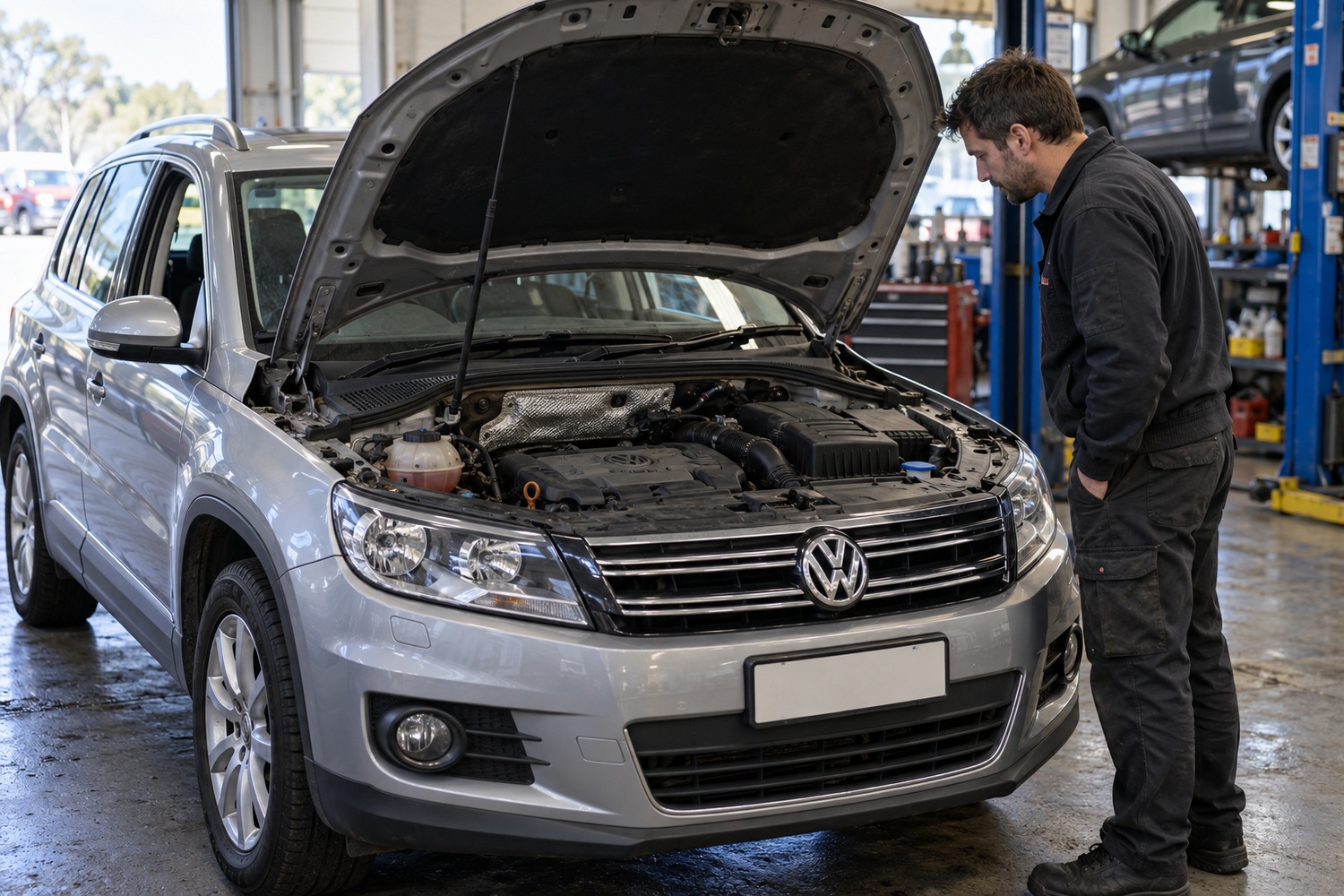
The rattle lasts a second or two on a cold start, then clears. On the Tiguan it belongs to one engine family. That is the first generation’s 2.0 turbo petrol, the EA888.
Engines built from around 2008 to the middle of 2013 used a weaker tensioner design. It can lose its grip on the chain. Volkswagen revised the part, and later engines are far less affected. The exact cut-off moves with the engine code. Treat those years as approximate rather than a hard line.
What matters to a buyer is that this is not a wear item you can put off. A slack chain that jumps a tooth takes the engine with it. Ask for an invoice showing the revised tensioner has been fitted. A car that still rattles on cold start is a repair you are buying. It is not a niggle you can live with.
The symptoms and the mechanism behind them are set out in our guide to timing chain rattle on cold start. The same tensioner design turned up right across the Volkswagen and Audi range. The version of this story that plays out on the hatch is covered in common VW Golf problems.
Coolant on the driveway: the second generation’s water pump
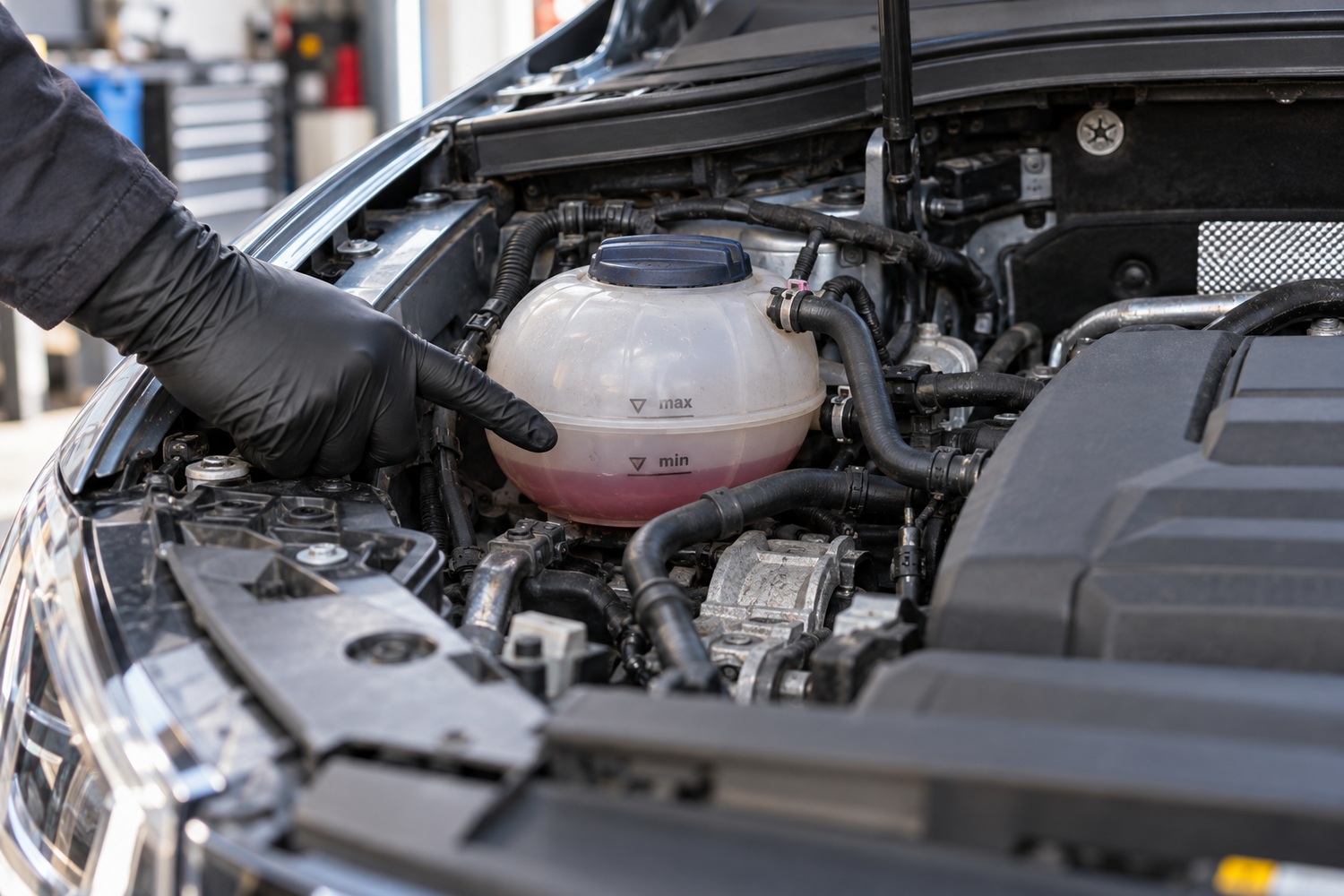
Second-generation 2.0 petrol Tiguans run the third-generation EA888 engine. On that engine the water pump and the thermostat share one plastic housing at the front of the block.
The leak starts slowly. It shows up as a coolant level that keeps dropping. Nothing gets hot enough to warn you until much later.
On a used car, check the level against the marks on the expansion tank. Ask whether the pump has already been replaced. Many have been by now. An invoice for that job counts in the car’s favour rather than against it. What the repair involves is covered in our article on when a VW or Audi water pump needs replacing.
Why does a Tiguan DSG hesitate or shudder?
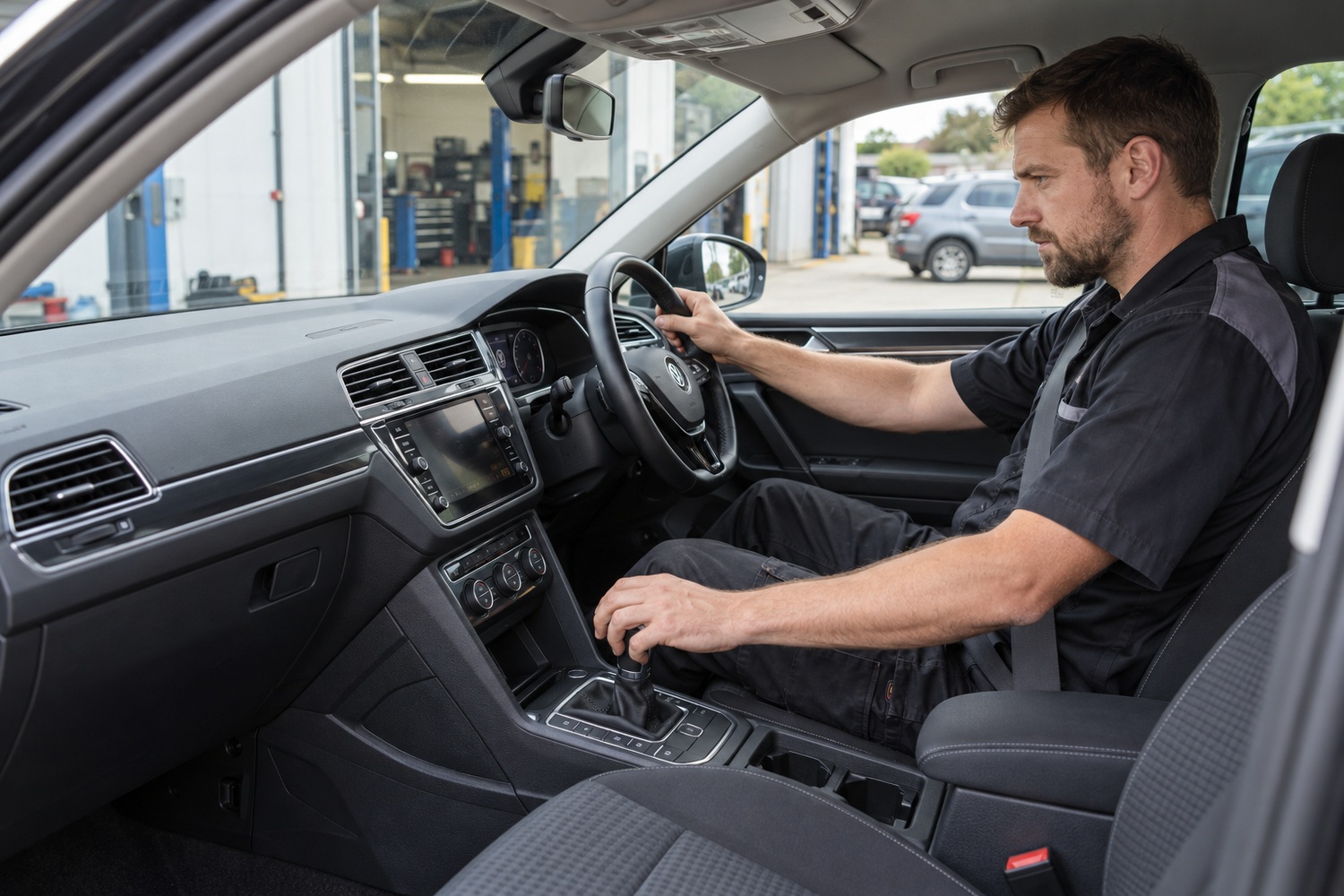
The DSG fitted to a Tiguan depends on the model and year. Volkswagen’s Australian MY16 brochure gives the front-drive 118TSI an optional six-speed DSG. The MY23 110TSI also has six speeds; that year’s 2.0 models have seven. A front-drive badge does not tell you it has a dry-clutch seven-speed. Confirm the gearbox code on the car before judging its service history.
Where the car has a wet-clutch gearbox, its clutches run in oil. Contaminated or never-changed oil sits behind a good share of the rough-shifting complaints. That makes the service history worth more here than on a conventional automatic. The same goes for the all-wheel drive coupling on 4Motion cars. It carries its own oil and leaves its own trail in the paperwork.
Drive the car from cold, and again once it is warm. Watch for three things. It hesitates as you pull away. It shudders on a downshift. It takes a long moment to take up drive or reverse. Any of those is the car telling you something. Do not buy it on a promise that a software update will settle it down. The early warning signs are covered in why VW and Audi DSG gearboxes feel rough before they fail.
Rough cold idle and a flat spot: carbon on the intake valves
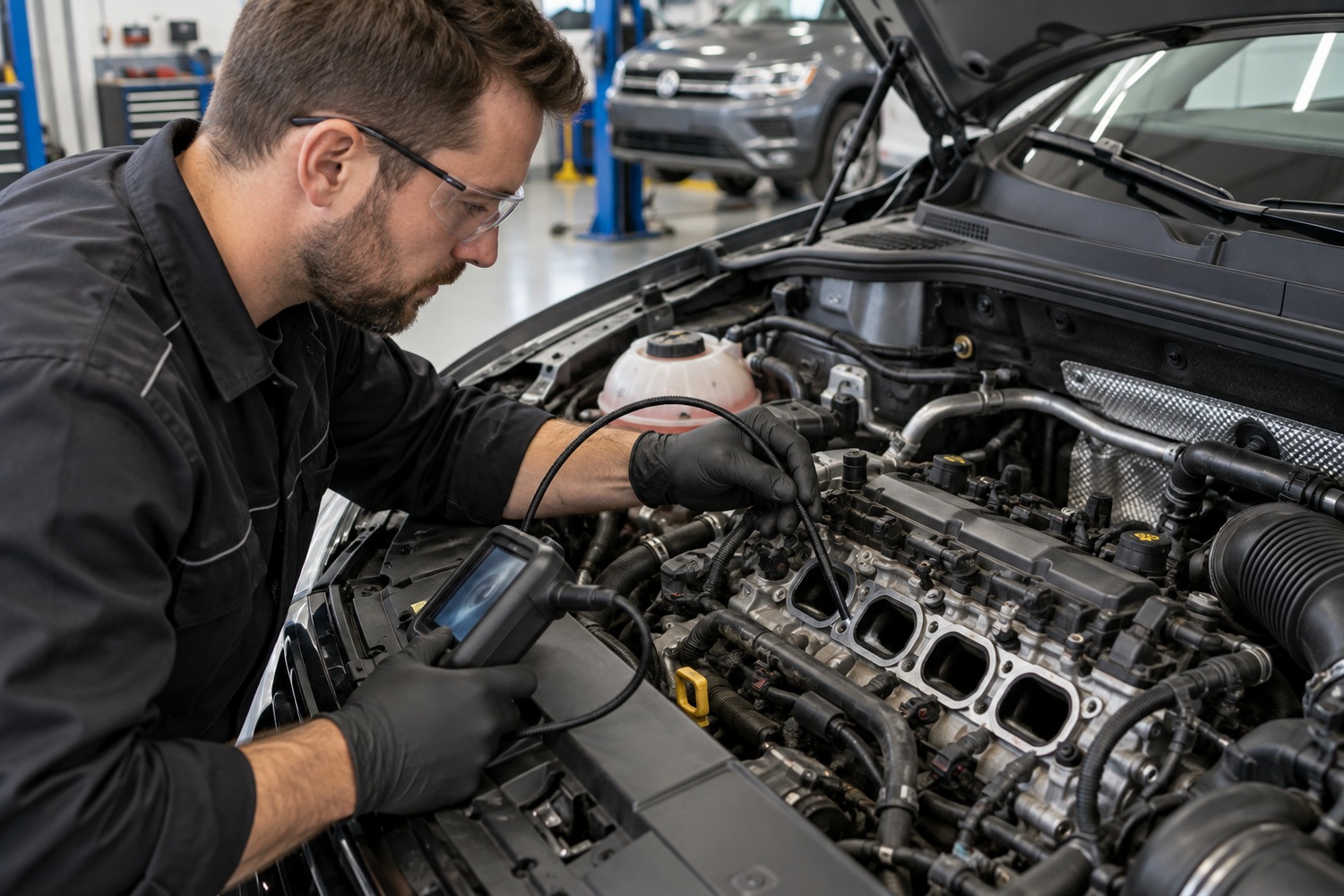
The injection system matters here. Volkswagen’s Australian MY23 specification lists direct injection for the 110TSI and 132TSI, but adds intake-manifold injection for the 162TSI. So the claim that fuel never washes the intake valves does not fit every petrol Tiguan. Rough cold idle, a flat spot or a misfire needs diagnosis on the particular engine before carbon cleaning is prescribed.
Tiguans on the Northern Beaches do plenty of short runs between Brookvale, Dee Why and Manly. Describe that driving pattern when you book a diagnosis. Our article on why VW and Audi engines get carbon buildup covers the symptoms and the options.
Wet carpet in a Tiguan: the panoramic roof drains
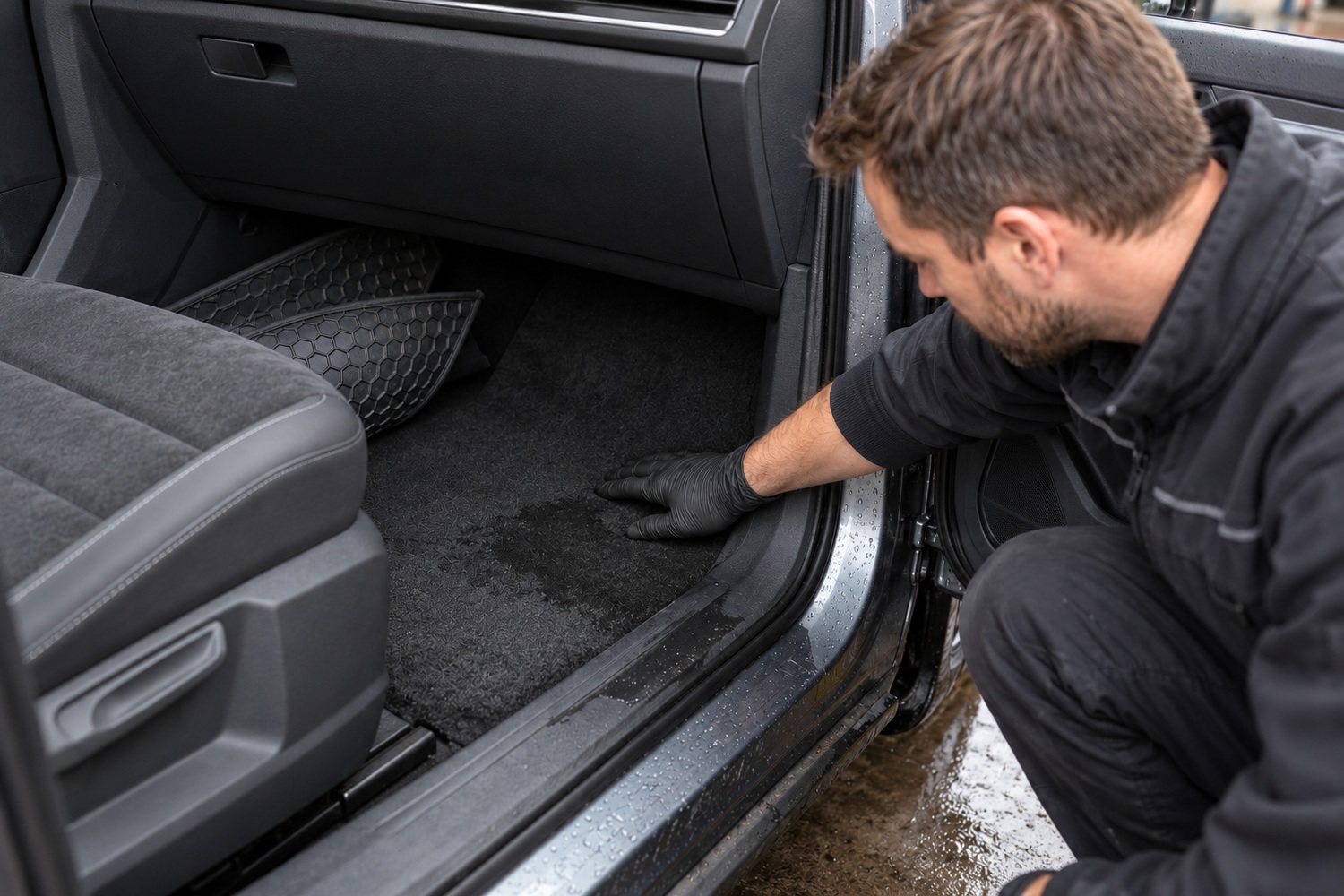
Check the carpets even if the sunroof opens and closes normally.
The panoramic roof sits in a tray with a drain at each corner. Four tubes carry the water away, two down the windscreen pillars and two at the rear. Leaves, grit and the fine debris that collects under trees settle in the channels. The tray fills, and the water goes into the car instead of out of it.
The signs are easy to spot once you know them. A damp carpet shows up in one footwell after rain. Water can drip from behind the interior mirror onto the screen. There may be a musty smell that never quite clears, or a tide line on the sill trim.
It matters more than a wet floor sounds. A Tiguan carries control modules under the seats and along the sills. Water sitting in the carpet finds them. Tracing an electrical fault back to a blocked drain is a far bigger job. Clearing the drain was never the expensive part.
So press the carpet in all four footwells with your hand. Lift the boot floor and feel around the spare wheel well. Ask whether the drains have ever been cleared. If you own one already, clearing the channels is routine work. It is worth doing before the wet weather arrives.
Are these problems a reason to avoid a used Tiguan?
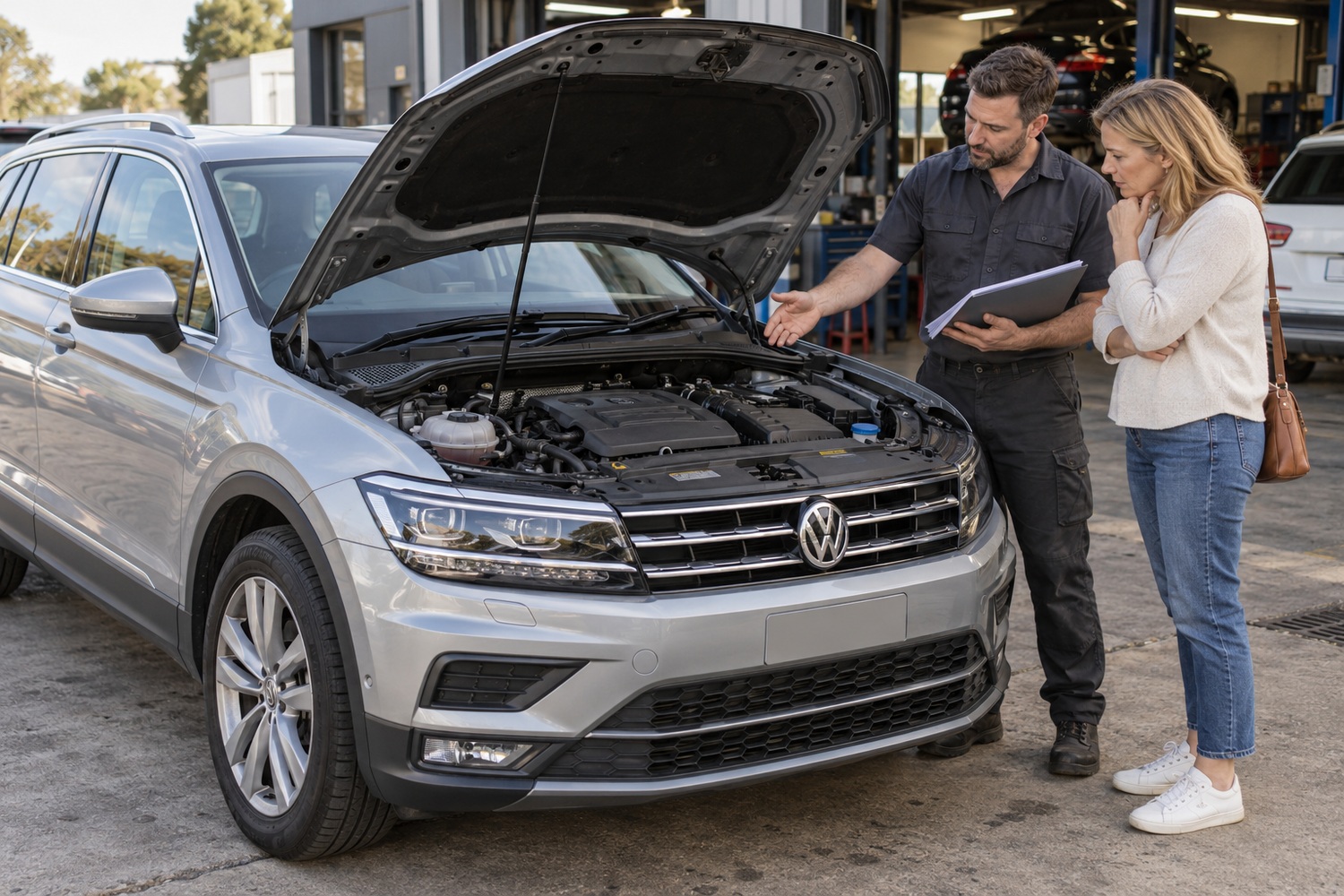
No. They are a reason to buy a particular Tiguan rather than any Tiguan.
The Tiguan problems on this page are all known, identified and findable. Each one sorts by generation. The car in front of you either carries that exposure or it does not. A first-generation 2.0 petrol with an invoice for the revised tensioner is a good buy. The same model with no history at all is a different proposition. A second-generation car with a dry boot floor is a good sign. A full coolant level answers a second question on this list. The general process for a used purchase is set out in what to check before buying a used car.
The Tiguans that cost their owners real money are almost always the same two cars. One was bought without any of these checks. The other was driven for a year with a symptom that got noticed and then ignored. That is true of most cars. It is simply easier to be specific on a model whose weak points are this well documented.
The check that settles most of it is a pre-purchase inspection. It needs someone who knows which engine and gearbox the car has. They can then read the service history against what that engine needs. Book an inspection with Northside AutoHaus before you commit to a used Tiguan. The same check works on the one you already own.
Frequently asked questions
Which Tiguan years should I avoid?
No single year is off the table on its own. The early first-generation 2.0 petrol cars carry the most reported trouble. Their tensioner design ran until about the middle of 2013. A later first-generation car, or a well-kept second-generation one, is a safer place to start.
Is a used VW Tiguan reliable?
It is about as reliable as its paperwork says it is. The known weak points are few, well documented and tied to particular generations. A car with the right records behind it is a sound buy. One with no records is a gamble on which fault has already happened.
What should I check on a Tiguan test drive?
Start it from cold and listen through the first few seconds for a rattle. Pull away gently, then firmly, and feel whether the gearbox holds back or shudders. Before you leave, put your hand on the carpet in every footwell.
Does the Tiguan Allspace have the same problems?
Largely yes. It is the stretched seven-seat version of the second generation. It carries the same engines, the same gearboxes and the same panoramic roof. Anything on this page that applies to a second-generation Tiguan applies to it too.
How do I tell which Tiguan generation I am looking at?
By its build date. Australian cars built up to 2016 are the first generation. Those from September 2016 through to 2024 are the second. The third arrived in May 2025. The plate under the bonnet gives the date.