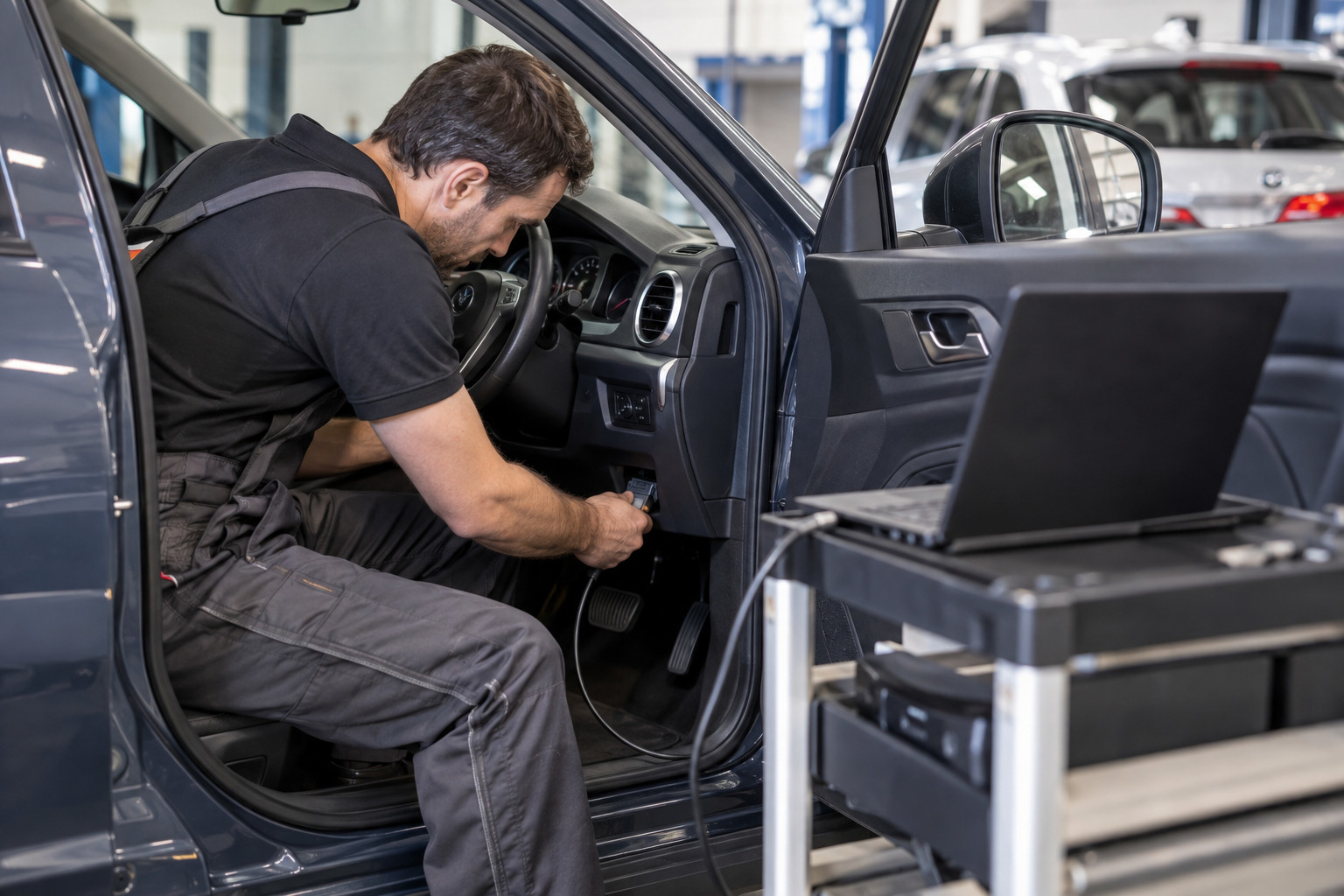
VAG is the shorthand the motor trade uses for the Volkswagen group of brands. It covers Volkswagen, Audi, Skoda and SEAT. A VAG service is ordinary scheduled servicing, done by a workshop that works on those brands. It follows the schedule the manufacturer publishes for your exact model and engine. It uses diagnostic software written for those cars rather than a generic code reader. The oil and the filters are the same job they are on any car. What changes is the schedule being followed, and what the workshop plugs in.
The acronym turns up on workshop signs, in forum threads and on parts listings. That is usually where the search for a VAG mechanic starts.
What does VAG stand for?
The letters come from Volkswagen AG, the German parent company’s registered name. AG is short for Aktiengesellschaft, which is German for a public company. Workshops use the acronym more loosely than that. It has become a name for the group of brands built on shared parts: Volkswagen, Audi, Skoda and SEAT. SEAT itself has not been sold new in Australia since 1999. Its performance offshoot Cupra has been on sale here since 2022.
The acronym is useful because those four brands share far more than a badge. A Golf, an Audi A3 and a Skoda Octavia of the same generation sit on the same MQB platform. That is the shared floorpan and mounting layout underneath the car. Many of them run the same EA888 petrol engine. It is the 2.0 litre turbocharged unit, badged TSI in a Volkswagen and TFSI in an Audi. Plenty run the same DSG gearbox, the twin-clutch automatic that lines up the next gear before it is needed. So a fault on a Golf and a fault on an A3 are often the same fault, with the same fix behind it.
What is different about a VAG service?
Four things, and none of them is the oil.
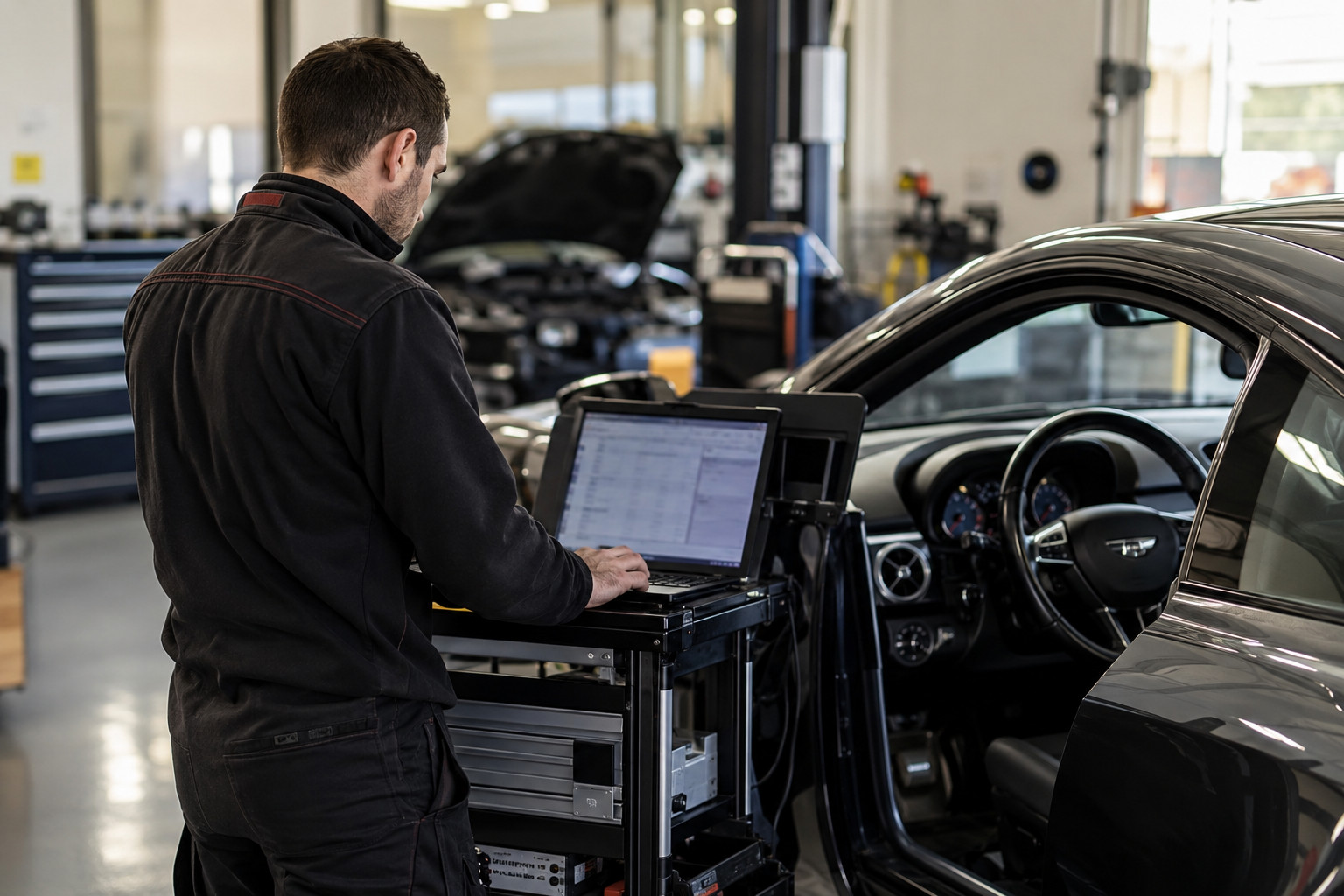
The first is what the workshop plugs in. A generic OBD reader connects to the standard socket under the dashboard. It returns a short list of standard fault codes. Brand-specific software talks to each control module in the car separately. It reads the manufacturer’s own codes, which go into far more detail. VCDS is one such tool. It is written for Volkswagen group cars, by an outside company rather than by the carmaker.
The second is the schedule. Volkswagen and Audi publish servicing requirements by model and engine, not one list for the whole range. Two cars of the same age and badge can sit on different schedules, because their engines differ. A workshop that sees these cars daily works from the schedule for your car.
The third is access to the manufacturer’s own information. There is an Australian law behind it. Since 1 July 2022, the Motor Vehicle Service and Repair Information Sharing Scheme has required carmakers to sell service and repair information to any Australian repairer at a fair market price. It covers manuals, wiring diagrams, technical service bulletins, testing procedures and the codes for computerised systems. It applies to passenger and light goods vehicles built on or after 1 January 2002.
The fourth is pattern knowledge. Every engine in the group carries an engine code, a short letter code that identifies the exact build. A technician who sees the same handful of codes each week knows which faults belong to which code. Those are the ones they check first.
Do you need a VAG specialist, or will any mechanic do?
For a good deal of the work, any competent workshop will do. That is worth saying plainly. Oil and filter changes, brakes, tyres, batteries, suspension, exhaust work and air conditioning are much the same jobs on a Golf as on anything else. On an older car that is out of warranty, a good local mechanic can look after most of what it needs.
Where it changes is electronics and gearboxes. Fault finding on these cars often runs through several control modules at once. The diagnostic path is specific to the brand. DSG work needs the right software and the right procedure. That goes double for the mechatronic unit, which controls the clutches and the gear changes. So do service reminder and service interval resets, which cannot always be done from the driver’s seat. If the car has thrown a fault nobody can pin down, the signs that point to a workshop with brand tools are worth reading first.
The honest test is the job, not the badge. For routine maintenance, use whoever you trust. For anything electronic, go to someone who sees these cars every week.
What does a VW or Audi service include?
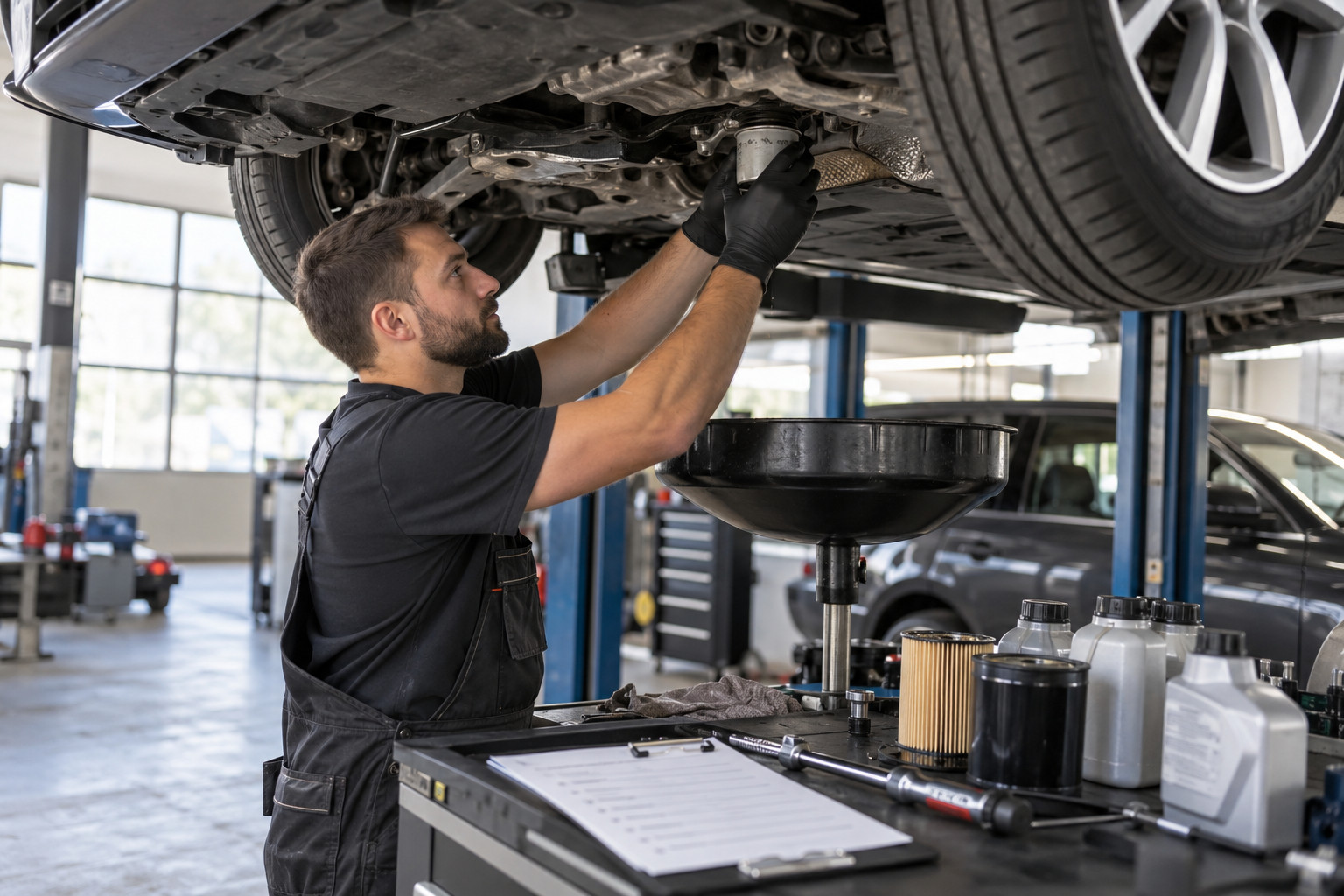
The same core work as any logbook service. Engine oil and filter, a look at the other filters, brakes, tyres, fluids and a road test. Cars that call for a diagnostic scan get one. What differs is which of those items falls due at which visit. That is set by the schedule for your model and engine. The full VW service intervals and maintenance schedule is set out elsewhere on this site. It is the place to check what your car is due for and when. On the Audi side, a longer walk through what to expect during maintenance covers what lands on the list at each visit.
How is a specialist workshop different from a dealer service centre?
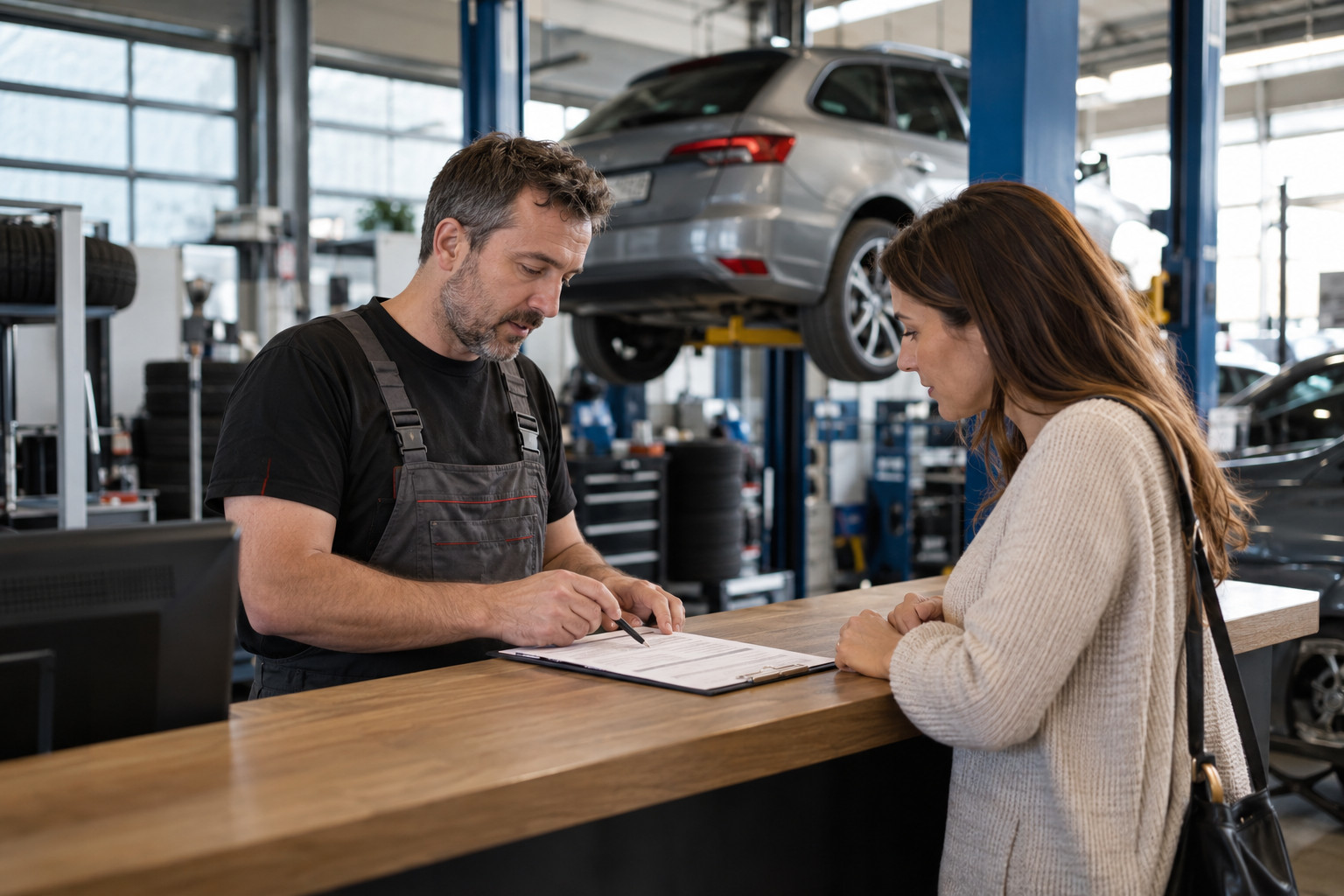
A dealer runs an authorised Volkswagen service centre or Audi service centre for a single brand. It works to the factory’s own processes, and uses the factory’s own systems. An independent specialist works to the same published schedule. It buys the same technical information under the Australian information sharing scheme. Both routes can service the car properly. The difference sits in how each workshop is set up, not in what the schedule asks for. On the Northern Beaches you have both open to you, so this is a live choice rather than a theoretical one. The longer comparison of independent versus dealer servicing for an Audi or VW is worth reading if you are weighing it up.
What to ask before booking
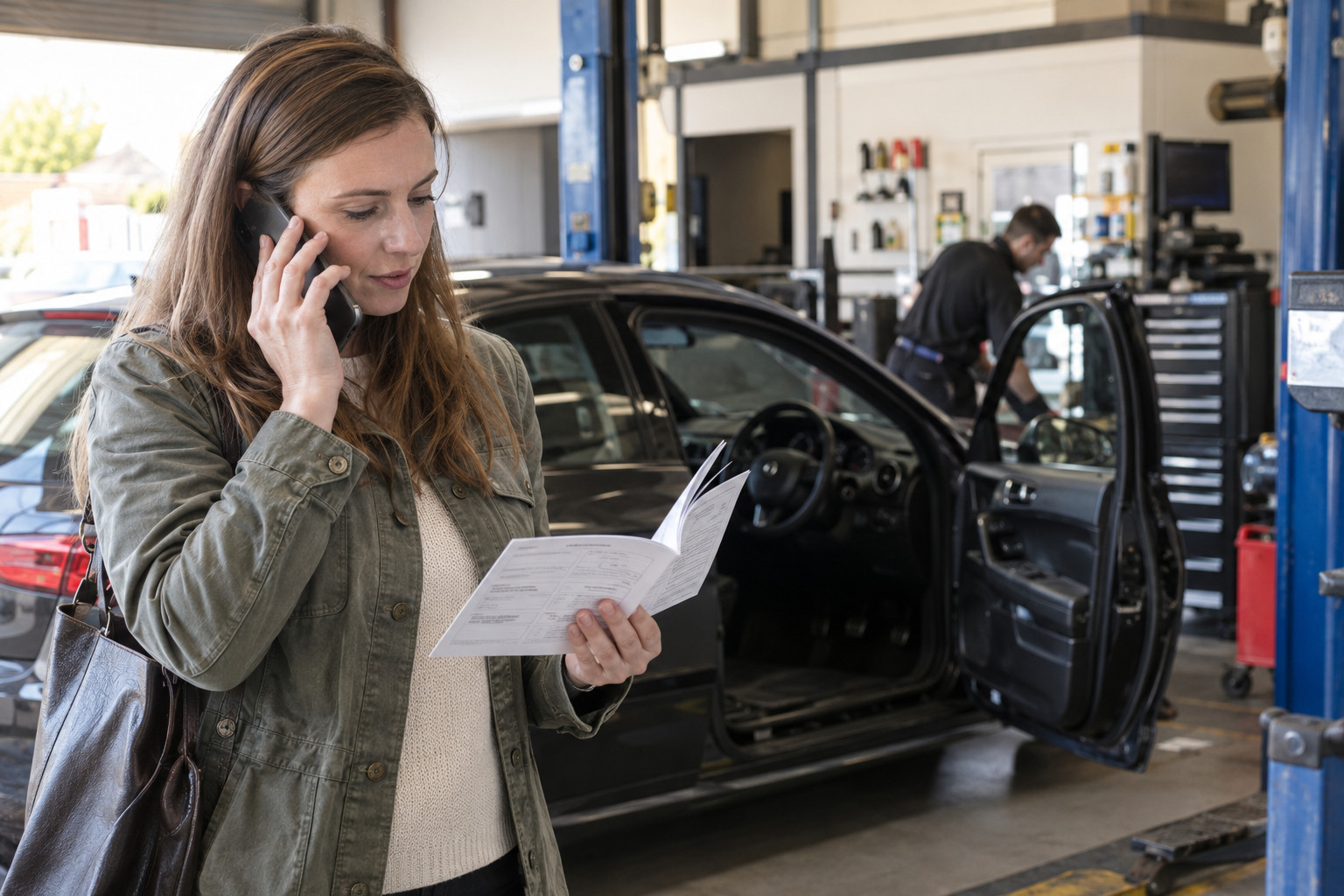
Five questions worth asking on the phone. The answers tell you quickly whether a workshop is set up for your car.
Northside AutoHaus works on Volkswagen and Audi, and the Audi and Volkswagen specialist servicing page sets out what that covers. When you get in touch, ask what your car is due for by model and engine code rather than by a generic service menu. The answer tells you straight away which of the two a workshop is reading from. Ring the workshop, or send through your details, and it is an easy question to answer.
- Which diagnostic system do you use for my brand? A named, brand-specific system beats “we have a scanner”.
- Is the service schedule specific to my model and engine? The answer should come back tied to your car, not to a general list.
- Does my service record get updated, and how? Ask where the record ends up, and what you get to keep.
- Have you worked on my engine code before? A workshop that knows the code will say so straight away.
- Which parts will you be using? Genuine or OEM quality means parts made to the carmaker’s own specification. It is a fair thing to ask before the work starts.
Frequently asked questions
Is VAG the same thing as VW?
No. VW is one of the four brands the acronym covers, alongside Audi, Skoda and SEAT. The letters trace back to Volkswagen AG, the German parent company, rather than to the Volkswagen brand on its own.
Do I need a VAG specialist for a basic oil change?
No. An oil and filter change on a Volkswagen or an Audi is ordinary work. Any competent workshop can carry it out. The case for a specialist gets stronger once electronics, gearboxes or a fault nobody can explain come into it.
Can an independent workshop get Volkswagen and Audi service information?
Yes. Australian law has required carmakers to sell that information to any local repairer at a fair price since the middle of 2022. It covers the technical material needed to service and repair the car, including the codes for its computerised systems.