A Golf, Tiguan, A3, or Q5 can feel fine for years, then slowly become harder to live with. It might stumble on a cold start, idle roughly at the lights, hesitate in stop-start traffic, or feel flat when you pull away from an intersection.
Many owners assume the car needs spark plugs, ignition coils, or a basic service. Sometimes it does. But in some VW and Audi direct-injection engines, carbon buildup on the intake valves can be part of the problem.
Northside AutoHaus in Brookvale works with Volkswagen and Audi vehicles across the Northern Beaches, so this is a familiar type of diagnostic problem. The important word is diagnostic. VW carbon buildup can cause rough running and misfires, but those symptoms are not proof on their own.
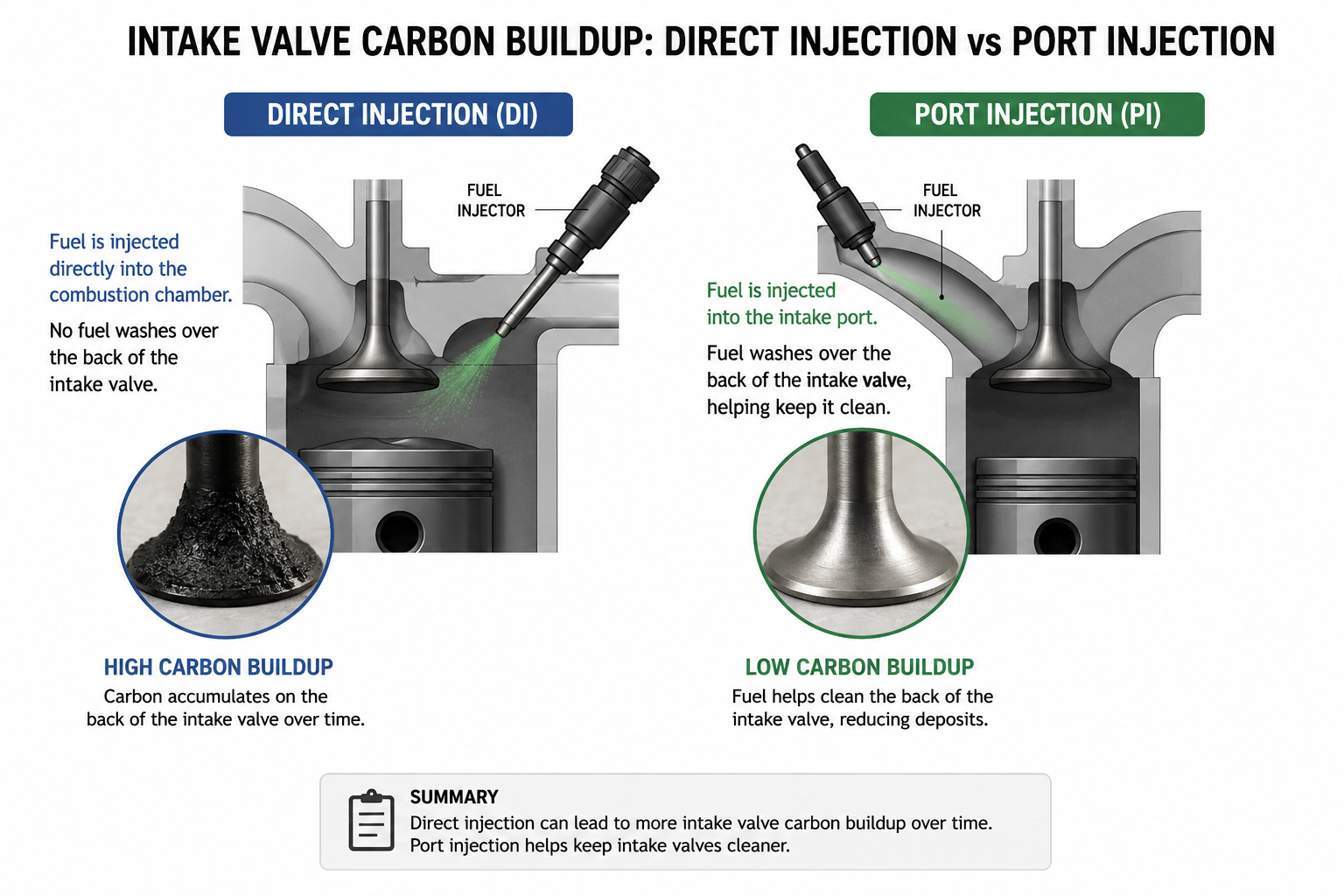
The quick answer: carbon buildup happens when oil vapour and combustion residue collect on the intake valves. In a direct-injection engine, petrol is sprayed directly into the combustion chamber, so it does not wash over the back of the intake valves the way it can in older port-injection engines. Over time, heavy deposits can affect airflow and cause rough idle, hesitation, misfires, and loss of power.
What is VW carbon buildup in a direct-injection engine?
VW carbon buildup usually means hardened deposits on the back of the intake valves. The intake valves are the small metal valves that open to let air into the engine before combustion.
In older port-injection petrol engines, fuel was sprayed into the intake port before entering the cylinder. That meant petrol and its detergents passed over the back of the intake valves. This did not make the engine immune from deposits, but it did help keep that area cleaner.
Many VW TSI and Audi TFSI engines use direct injection. In plain English, that means the fuel injector sprays petrol straight into the combustion chamber. This helps performance, economy, and emissions control, but it also means the intake valves no longer get the same fuel wash.
That is why TFSI carbon buildup and TSI engine problems often come up together in owner forums and workshop conversations. The issue is not that every TSI or TFSI engine will suffer badly from carbon deposits. It is that some direct-injection engines are more exposed to intake-valve buildup than older fuel-injection designs.
Why direct-injection engines are more prone to carbon buildup
Direct-injection engines are more prone to intake valve deposits because air, oil vapour, and exhaust residue can pass through the intake system without petrol cleaning the valve surfaces.
Several factors can make the problem worse:
- Fuel no longer washes the intake valves. In a direct-injection engine, petrol goes straight into the cylinder, bypassing the back of the valve.
- Oil vapour can enter through the crankcase ventilation system. Small amounts of vapour can settle on hot intake valves and harden over time.
- Short trips can add to the problem. Engines that do not reach full operating temperature often may build deposits faster.
- Stop-start driving can make symptoms more noticeable. A VW or Audi driven around Pittwater Road, Warringah Road, Dee Why, and Manly traffic may spend a lot of time idling or running at low load.
- Oil quality and service history matter. The correct oil and proper service intervals help reduce avoidable deposits and related faults.
- PCV faults can contribute. The positive crankcase ventilation system controls crankcase vapour. If it is not working properly, more oil vapour may reach the intake.
Age and kilometres also matter. A newer vehicle with a healthy PCV system and regular servicing may show no serious symptoms. An older direct-injection engine with high kilometres, short-trip use, oil consumption, or a weak service history may be more likely to show signs.
What carbon buildup feels like to drive
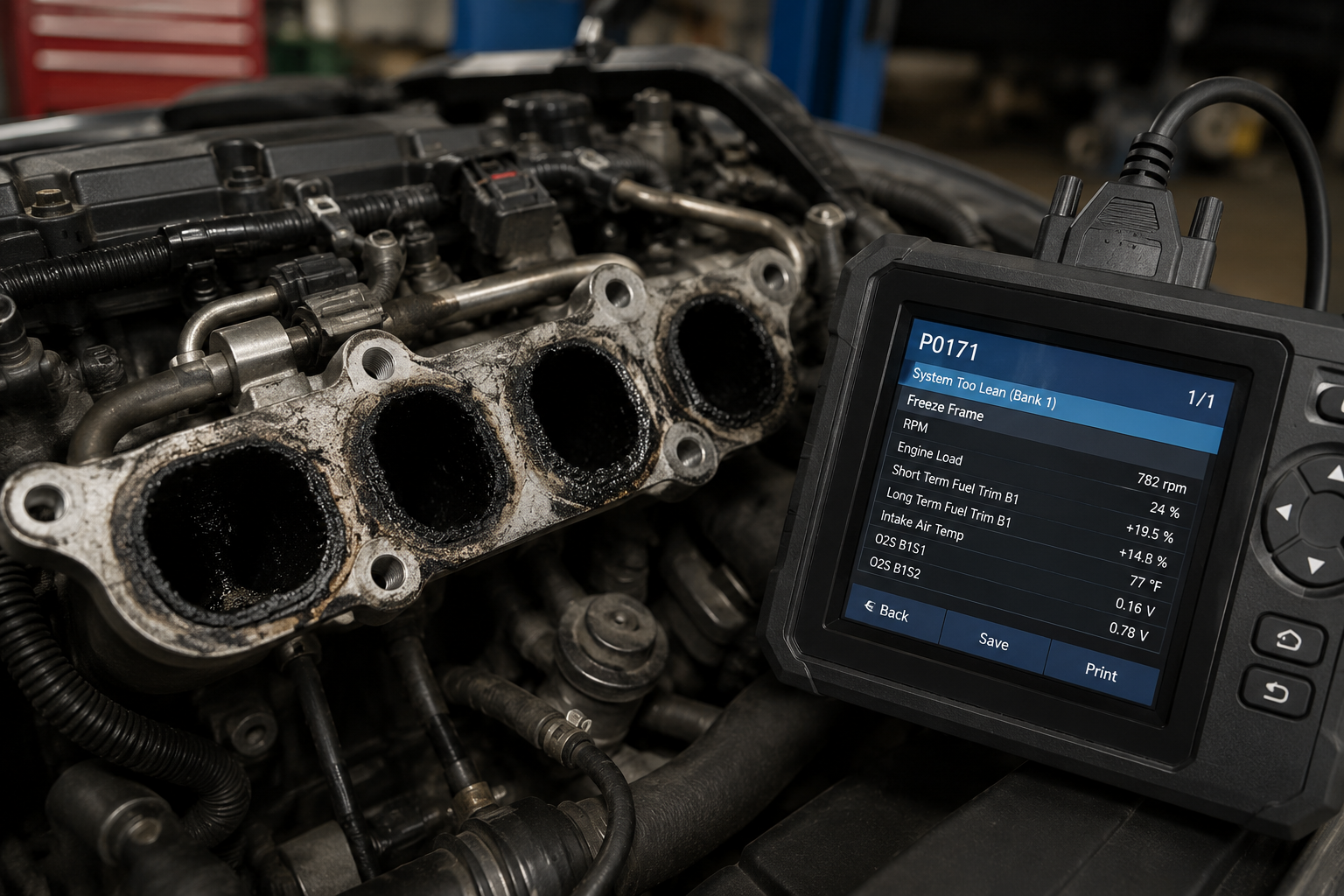
Carbon buildup can feel like a rough, uneven, or hesitant engine, especially at idle or under light throttle. The tricky part is that several simpler faults can feel the same.
| Symptom | What the driver notices | What else it could be |
|---|---|---|
| Rough idle | The engine shakes, hunts, or feels uneven at lights | Spark plugs, coils, vacuum leak, PCV fault |
| Cold start stumble | The car coughs or runs roughly when first started | Battery, plugs, injectors, fuel pressure |
| Hesitation under throttle | A delay or flat spot when accelerating | Turbo issue, air leak, fuel delivery fault |
| Misfire codes | Check engine light and stored misfire faults | Coils, plugs, injectors, compression issue |
| Loss of power | The car feels dull or reluctant under load | Turbo, intake leak, exhaust restriction |
| Higher fuel use | The car needs more fuel for the same driving | Tyres, oxygen sensor, thermostat, service issue |
| Check engine light | Warning light appears or returns after clearing | Many engine, emissions, or sensor faults |
The key point is simple: these symptoms can support a carbon buildup diagnosis, but they do not prove it. A VW or Audi should not be sold an intake clean just because it has a rough idle.
Is it carbon buildup or something simpler?
A good VW or Audi specialist should not jump straight to walnut blasting or intake cleaning without checking the basics first. Carbon buildup is a real issue, but it is not the only cause of direct-injection engine problems.
A proper diagnostic process should usually check:
- Fault codes stored in the engine computer
- Live misfire data, not just the warning light
- Spark plug age, condition, and correct fitment
- Ignition coils and coil-related fault patterns
- PCV system operation
- Vacuum leaks or unmetered air entering the intake
- Intake pipework and turbo-related air leaks
- Fuel pressure and injector behaviour where relevant
- Software updates or known engine-specific faults
- Visual or borescope inspection if carbon buildup is suspected
This matters because a random repair can get expensive quickly. Replacing coils, plugs, sensors, or intake parts without a clear reason may not fix the problem. The same applies to cleaning. If the engine has a vacuum leak or a failing PCV valve, an intake clean alone may leave the owner with the same rough-running fault.
Does walnut blasting fix carbon buildup?
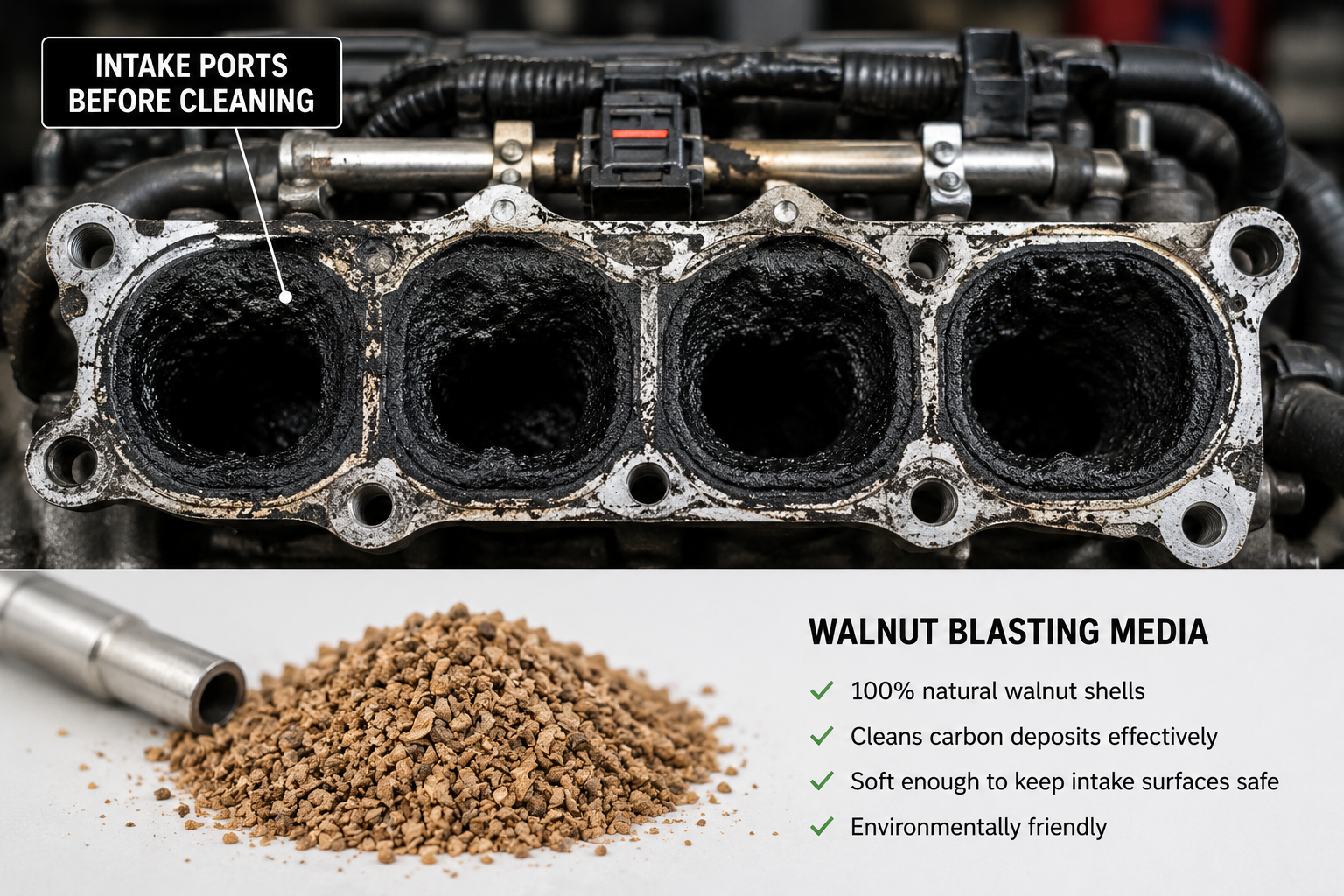
Walnut blasting is a common method for removing heavy carbon deposits from intake valves. It uses fine crushed walnut shell media, blasted through the intake ports, to break away hardened carbon without using a harsh metal abrasive.
On many direct-injection engines, the intake manifold has to be removed so the valves can be accessed. The technician then cleans one intake port at a time, with the engine positioned so the valves being cleaned are closed. The carbon and walnut media are vacuumed away during the process.
Walnut blasting can be effective when heavy intake-valve deposits are the confirmed problem. It is not a miracle fix for every rough idle or misfire.
Chemical intake cleaners and aerosol products can have a place in some maintenance work, but they have limits. Fuel-tank additives are especially limited on direct-injection intake-valve deposits because the petrol does not pass over the back of the intake valves. Some dedicated intake products are designed to be delivered through the intake tract, but heavy baked-on deposits may still need mechanical cleaning.
Australian pricing varies widely. Current public price guides suggest a broad range of about $450 to $950 for many four-cylinder and six-cylinder walnut blasting jobs, with higher costs possible on more complex engines. The final price depends on engine layout, access, labour time, gaskets, seals, and whether related faults such as PCV problems are repaired at the same time.
Can carbon buildup be prevented?
Carbon buildup can often be managed, but it cannot always be fully prevented in every direct-injection engine. The aim is to reduce avoidable causes and catch symptoms before they become harder to diagnose.
Helpful steps include:
- Use the correct oil for the engine. VW and Audi engines often require oil that meets a specific approval, not just the right viscosity.
- Follow the correct service interval. Long gaps between oil changes can make oil vapour and sludge-related problems worse.
- Fix PCV faults early. A failed or weak PCV system can increase oil vapour in the intake.
- Do not ignore oil consumption. More oil passing through the system can add to deposit problems.
- Avoid relying on fuel additives as a cure. They may help other parts of the fuel system, but they are unlikely to clean heavy deposits on intake valves in a direct-injection engine.
- Give the engine proper warm runs. Longer drives can help the engine operate cleanly, but they will not remove heavy deposits once they have hardened.
The best prevention is not one product. It is correct servicing, early diagnosis, and understanding the limits of quick fixes.
When should a VW or Audi owner book a check?
A VW or Audi owner should book a diagnostic check when rough running keeps coming back, especially if the car has already had basic parts replaced.
The warning signs worth checking include:
- Rough idle that returns after servicing
- Misfire codes on one or more cylinders
- Hesitation under light throttle
- Cold start stumbling
- Loss of power under load
- Fuel use that has changed without an obvious reason
- A check engine light that returns after being cleared
- A car that has already had plugs or coils replaced but still runs badly
For VW and Audi owners in Brookvale or across the Northern Beaches, the safer move is to diagnose the fault before paying for random parts or a generic clean. Carbon buildup may be the cause, but the first job is proving it.
Northside AutoHaus can inspect the symptoms, scan the vehicle, and work through the likely causes before a repair path is chosen.
Frequently Asked Questions
Carbon buildup is a known issue on some VW TSI direct-injection engines, especially as kilometres increase. It should not be treated as automatic or inevitable in every engine. Driving pattern, service history, PCV condition, oil quality, and engine design all affect how severe it becomes.
TFSI carbon buildup is broadly the same intake-valve deposit issue seen in some direct-injection Audi engines. Audi and Volkswagen share several engine families, so the diagnostic logic is similar. The exact risk and repair path still depend on the engine, model, age, and symptoms.
Premium fuel will not reliably stop intake-valve carbon buildup in a direct-injection engine. Higher-quality fuel may help other parts of the fuel system, but the intake valves do not get the same fuel wash as they would in a port-injection engine.
Fuel additives are unlikely to clean heavy intake-valve deposits in a direct-injection engine because the fuel is sprayed straight into the combustion chamber. Dedicated intake cleaners are different from fuel-tank additives, but heavy deposits may still need mechanical cleaning.
You may be able to keep driving with mild carbon buildup, but misfires, hesitation, or loss of power should not be ignored. A misfiring engine can damage other components and may become unsafe if the car hesitates when pulling into traffic.
There is no single kilometre number that suits every VW or Audi engine. Many owners start asking about carbon buildup once a direct-injection engine passes about 60,000 to 100,000 km, especially if rough idle, cold start stumble, or misfire codes appear. Symptoms and diagnosis matter more than the odometer alone.